The realm of funeral doom is indeed a multi-layered macrocosm, with each band existing and thriving within its own panoply of sonic environments. While many acts bear resemblance to their influences, there are a select few who transcend imitation entirely—breaking the mold and forging an identity unmistakably their own. Enter Chalice of Suffering, perhaps one of the most iconic funeral doom bands in the underground.
When the sacrosanct mourning call of funeral doom first beckoned me years ago, Chalice of Suffering was the band that resonated the loudest and the clearest. Alongside Daudaro, Pantheist, and Shape of Despair, I began a sonic descent from which there was no return. Great things, it seems, are forged in darkness.
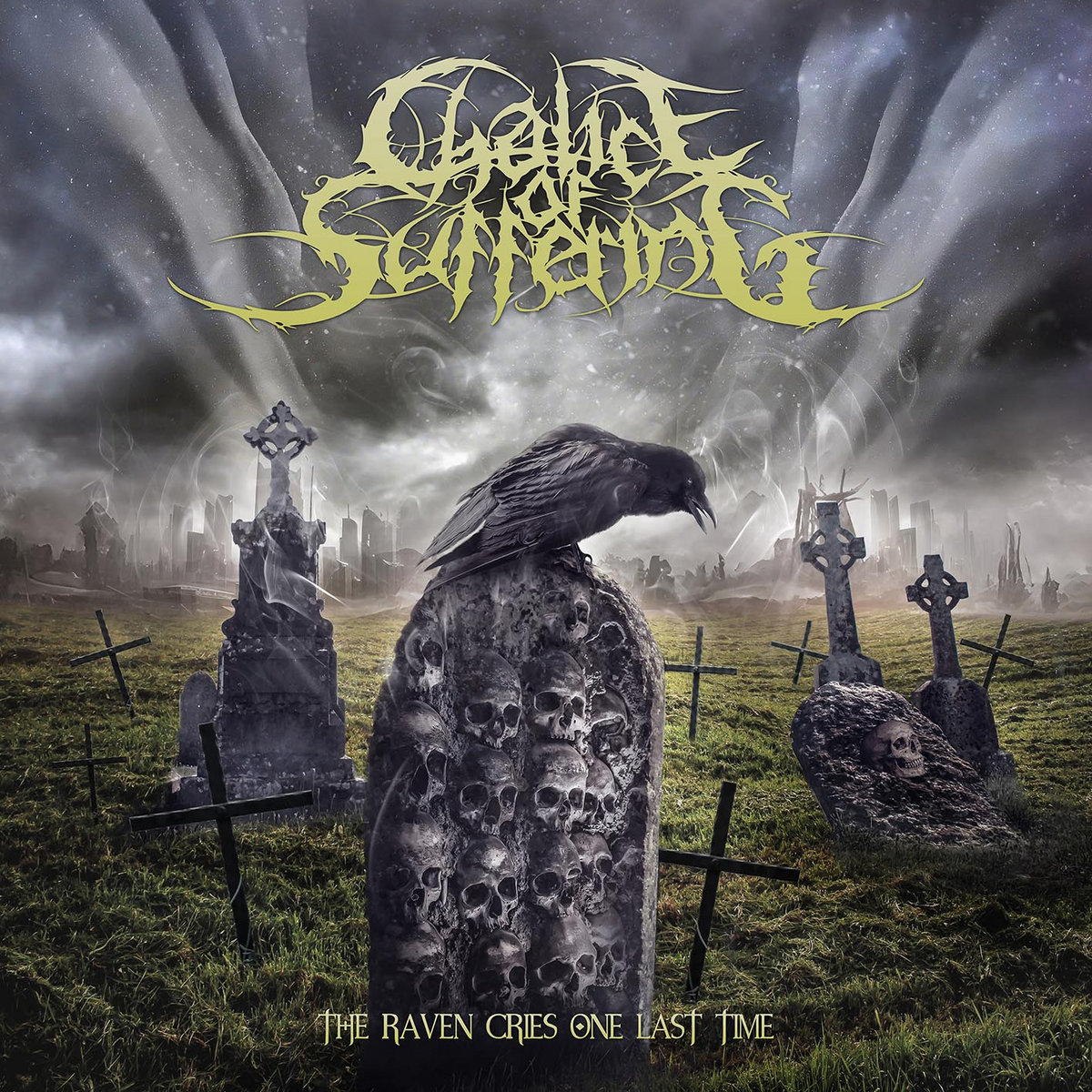
With their latest offering, The Raven Cries One Last Time, Chalice of Suffering once again prove—unsurprisingly—that they remain at the forefront of the genre. Consisting of six tracks with an average running time of nine minutes, the album expands their catalog with a work that feels both familiar and evolved: a continuation of their slow-burning, grief-laden dirges refined through experience and control.
Admittedly, the bar is set exceptionally high here—so much so that any attempt by subsequent bands to reach it would likely result in a frantic scramble to emulate the brooding brilliance contained within this release.
First and foremost, the production is strikingly crisp and balanced. The guitars sit perfectly within the mix—neither overpowering nor recessed—allowing ample space for the synths to unfold. These synth layers swirl and hover like disembodied wraiths just beyond peripheral vision, enhancing rather than overwhelming the compositions. The percussion, particularly the snare, is delivered with a restrained touch of reverb, lending each strike a sense of presence without excess. It is, overall, a remarkably clean and deliberate mix.
Vocalist John McGovern brings a compelling duality to the album. His low, menacing growls cut through the music like a dark sentinel, guiding the listener through the narrative’s descent. In contrast, his subdued spoken passages—often deepened through pitch manipulation—add an eerie, almost spectral dimension, as though the voice itself is emerging from somewhere beyond the physical plane.
“Another Night in Pain” opens the album with a declarative, shadow-drenched statement. Its opening minutes, absent of percussion, draw the listener inward through ethereal pads and clean guitar passages before gradually unveiling the full weight of the composition.
One of the album’s more surprising turns arrives with “In the End,” which channels a noticeable influence from Neurosis. The shift toward mid-tempo chuggery introduces a different kind of tension—less suffocating, more expansive—while still maintaining the album’s overarching sense of decline and desolation.
Equally compelling is the inclusion of Kevin Murphy’s bagpipes. While not new to the band’s sound, their presence here feels especially evocative. There is something distinctly dark and folkloric in their tone—wraithlike and serpentine—as they weave between the guitars. At times, they mirror melodic lines; at others, they provide a subtle counterpoint, enriching the album’s emotional and textural depth.
“All That Has Withered,” the third track, further showcases McGovern’s command of dual vocal styles while introducing a progressive slant. The track delays its full descent into crushing heaviness, instead building tension through restrained instrumentation and spoken passages. By the time the guitars emerge in their full gothic, doom-laden weight, the listener is no longer observing the descent—they are fully immersed within it.
The title track, “The Raven Cries One Last Time,” stands as the album’s defining moment. Not only does it embody the record’s most potent blend of melody and darkness, but it also introduces a subtle yet effective use of syncopated drumming—an uncommon but welcome element within funeral doom’s typically rigid structures. More importantly, the track functions as a quiet declaration: a challenge to the genre itself. By integrating traditional doom frameworks with folk instrumentation, layered vocal approaches, and a clear commitment to thematic and compositional depth, Chalice of Suffering demonstrate that funeral doom still has vast, uncharted territory to explore.
Simply put—the bar has been raised.
In the end—pun intended—Chalice of Suffering have not merely refined their craft; they have expanded it. I did not expect them to surpass Lost Eternally, a release whose dark, sonic beauty has long endured within my own rotation and even influenced my work. Yet this is precisely what great bands do: they push their sound forward while retaining the essence that defined them in the first place.
It would not be surprising to see other bands within the genre begin to adopt elements explored here—particularly the use of folk instrumentation—as a means of deepening atmosphere and narrative presence. Paired with the album’s vivid imagery, the music evokes a somber vision of ghosts wandering the moors, suspended between memory and oblivion.
The raven may have cried one last time—but its echo will fade nevermore.