Ritual Funeral Doom denotes an aesthetic configuration within Funeral Doom in which ritual sound structures are combined with archaic or mythologically coded narratives.
To bring together the diverse artists at the intersection with Ritual Industrial or Pagan Folk and its variants—without explicitly invoking the religious connotations of Paganism or Neopaganism—it is useful to group them under the term Ritual Funeral Doom. The term not only references Ritual Industrial but also points to the ritual element of many projects that use repetitive, hypnotic structures and symbolically charged soundscapes—such as Ea—to create a sacred and mystical tonality.
While Ea seeks a universal meta-level of ritual introspection through the construction of a virtual primordial religion, Ritual Funeral Doom artists, on the other hand, deliberately draw on fragments of concrete, often archaically coded narratives to stage a sense of rooted spiritual identity. These recourse to myths and cultural origins reflect—according to Zygmunt Bauman—the desire for stability and orientation in a “liquid modernity,” a modernity that dissolves traditional anchor points and places the individual in a state of existential uncertainty.
Retreat into Nature
Retreating into nature and engaging with its ambivalence constitutes a central facet of this desire to escape. The flight from a technologized, rationalized, and alienating society manifests both in the search for immediate natural experience and in a turn toward archaic narratives and prehistoric imaginings.
While nature as a personal retreat allows for both contemplation and confrontation, the reconstruction of mythical, shamanic, or spiritual elements opens another, often esoterically charged dimension: the search for an original, transcendent understanding of the world. This search, which in Funeral Doom occasionally merges with Pagan Folk, Nordic Ritual Folk, or Ritual Industrial, projects identity and longing as well as alienation and fragmentation into a prehistoric-charged mysticism.
In an increasingly urbanized and globalized society, the need for nature experiences grows alongside the idea of returning to archaic origins. This recourse to an imagined prehistory manifests across different musical genres. Neofolk, Pagan Folk, Nordic Ritual Folk, and Ritual Industrial operate with such projection surfaces. In Funeral Doom, the intensive engagement with archaic or prehistoric motifs remains marginal but represents a significant thematic complex. A project like Goatpsalm occupied this space on the album Downstream through stark archaicism and a reference to a kind of primal force of life itself. Ea, in contrast, condenses the prehistoric, mystical, and unknown aesthetically.
Artists at the intersection of Ritual Industrial or Pagan Folk—such as Celestiial or Blood of the Black Owl—ideologically draw on mythologies, Neopaganism, shamanism, or animistic concepts. What these projects share is the pursuit of hypnotic-meditative soundscapes and a spirituality that can be read as an aesthetic expression of the desire for connectedness.
Style
Musically, Ritual Funeral Doom arises from combining the radical slowness and weight of Funeral Doom with folkloristic or archaically connoted instrumentation. Acoustic elements, field recordings, flutes, or ritual percussion expand the traditional sound palette. The mythologically charged narratives range from prehistoric projections to Neopagan references. The recourse to archaic symbolism is constitutive.
Content
An asserted closeness to nature, prehistoric societies, or primordial spirituality often functions as a counterpoint to alienation and technologization. In doing so, the adaptations generally make no claim to historical authenticity or academically grounded cultural research. Myths appear fragmentary, individualized, and aesthetically hybridized. They become a projection surface oscillating between romantic fiction and ideological overlay.
A consistent social or historical embedding is usually absent. Here, the project Goatpsalm differs from Ritual Funeral Doom. On Downstream, the trio formulates a distinctly materialist perspective: Ice age life appears as a brutal struggle for survival in an indifferent world—archaic, existential, de-romanticized.
In Ritual Funeral Doom, a different approach to mythology often dominates. Instead of historical contextualization or universal anthropology, there is an eclectic montage of fragments primarily serving to stabilize a self-constructed worldview. This aesthetic is not inherently political—but it remains amenable to ideological readings, particularly where antimodern desires for imagined primordiality are romanticized.
Imaginary Space for Alternative Meaning
This ambivalence becomes particularly evident in the proximity of some projects to geomythologically identity-forming or ethnopluralistically charged origin myths. For example, the project Mørkheim, after renaming itself Blóðtrú, turned to National Socialist Black Metal; Grívf collaborated with the label Det Germanske Folket. Both are among the early representatives of this small sub-current, though with their Funeral Doom releases, they did not explicitly position themselves politically.
Ideological positioning in extreme metal generally occurs rarely through explicit programs but rather through aesthetic codes, networks, and contexts. In liquid modernity, as Bauman might argue, seemingly stable identity offers gain attractiveness. Rituals, myths, and cultural symbols serve as projection surfaces for a desired continuity.
Here arises an interface with antimodern to proto-fascist thought patterns, as formulated by figures such as Mishima, D’Annunzio, Spengler, Jünger, or Evola: the pathos of the individual, the exaltation of sacrifice, struggle, and spiritual elite, the notion of a qualitatively “higher” being. These thought models operate with an aestheticized self-aggrandizement directed against a perceived leveling modernity.
Funeral Doom from the outset was introspective, romantic, mystical, and occultly interested—with references to Lovecraft, Crowley, or satanic symbolic systems. A music of inner life, melancholy, and metaphysical quest. For this reason, its potential compatibility with hyper-masculine, social-Darwinist worldviews appears contradictory. The vulnerable self-inquiry of Funeral Doom stands opposed to the martial straightforwardness of many Black Metal derivatives. Yet aesthetic transitions do exist.
Ritual Funeral Doom, with its mix of archaic and sacred narratives, opens an imaginary space for alternative meaning. Not real history or transmitted mythology are central, but their aestheticized recombination. In this process, the search for meaning sometimes transforms into a confirmation of an already conceived self-image.
At the same time, the ideological function of such mythopoetics remains ambivalent. Only a few projects can be explicitly assigned to extreme right-wing contexts. More often, archaic narratives serve as aesthetic escape points from modernity without an explicit political orientation. Rather, esoteric and spiritual quests can be observed. Like many forms of esoteric meaning-making, this aesthetic remains structurally open to ideological appropriation, without necessarily leading into such contexts.
Some Examples
Between the following projects, the boundaries to Pagan Folk and Ritual Ambient blur. The subgenre ranges from introspective spirituality to archaic-ideological exaggerations. A common denominator is the esotericism of sought-after secret knowledge and the aesthetic condensation of origin narratives.
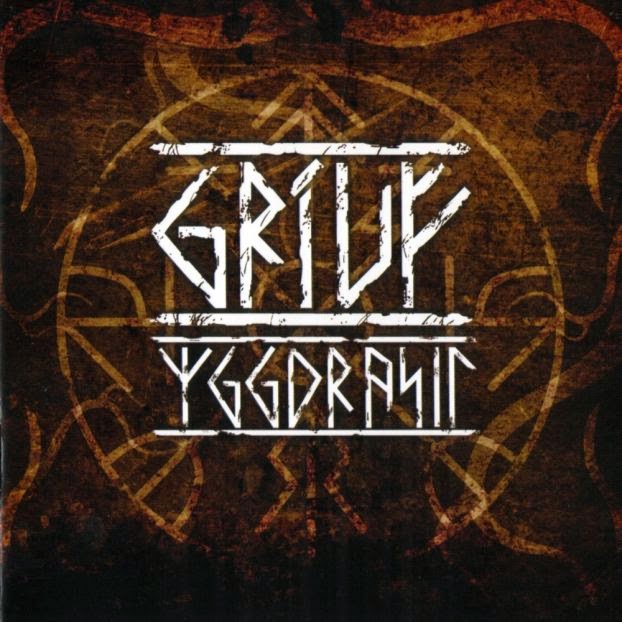
- Grívf processes apocalyptic aspects of Norse cosmogony—Ragnarök, world-fire, cyclical destruction. Minimalist, repetitive guitar passages, natural sounds, and occasional acoustic instruments create an atmosphere of existential resignation.
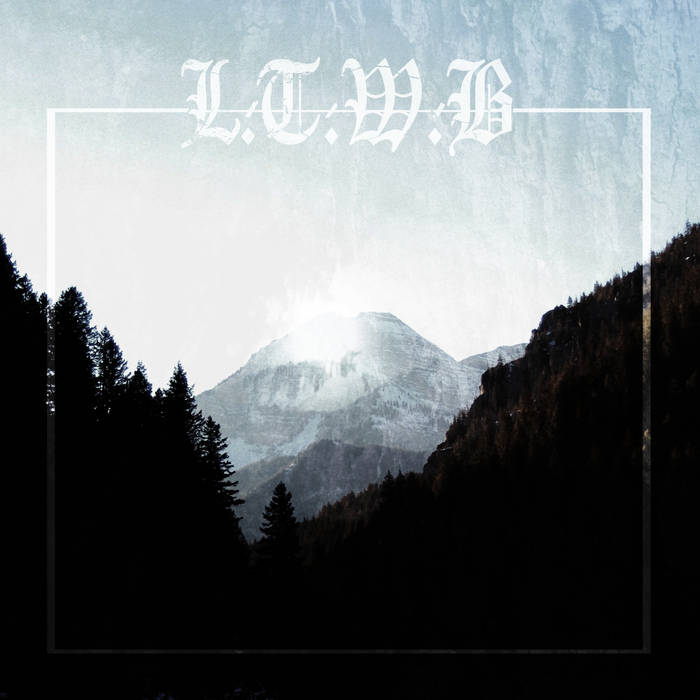
- Lucian the Wolfbearer combines introspective nature-connectedness—almost Thoreau-like—with romanticized mythology. Flutes and harps permeate the ponderous riffs, generating a meditative, almost idyllic mood.
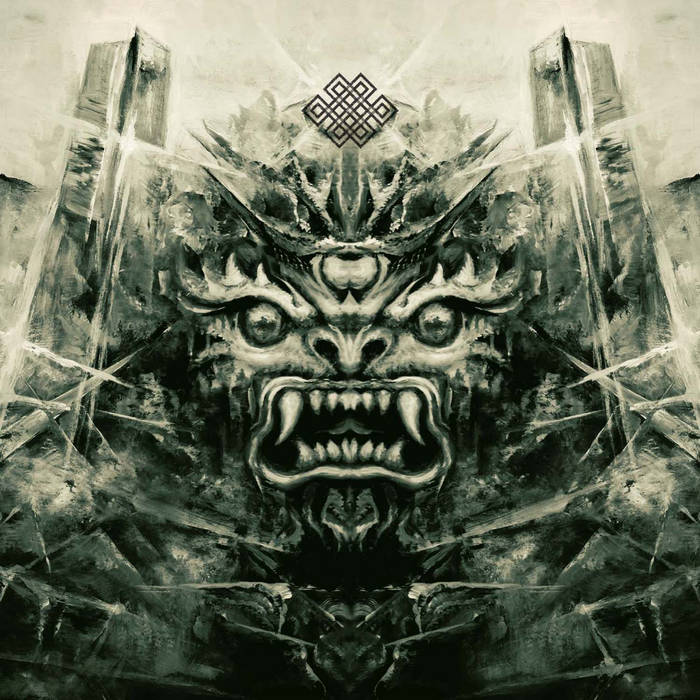
- Abysskvlt draws on Tibetan cosmologies, addressing metaphysical journeys, karma, and rebirth. Meditative soundscapes merge with deep growling to produce a ritual sound between transcendence and existential weight.
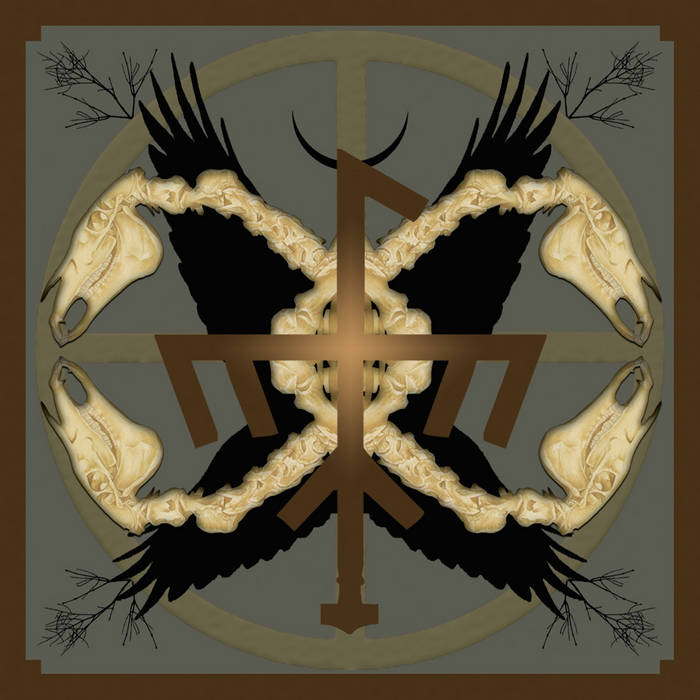
- Blood of the Black Owl integrates Native American flutes, field recordings, and ritual percussion into the heaviness of Funeral Doom, evoking an idealized harmony between humans and nature.
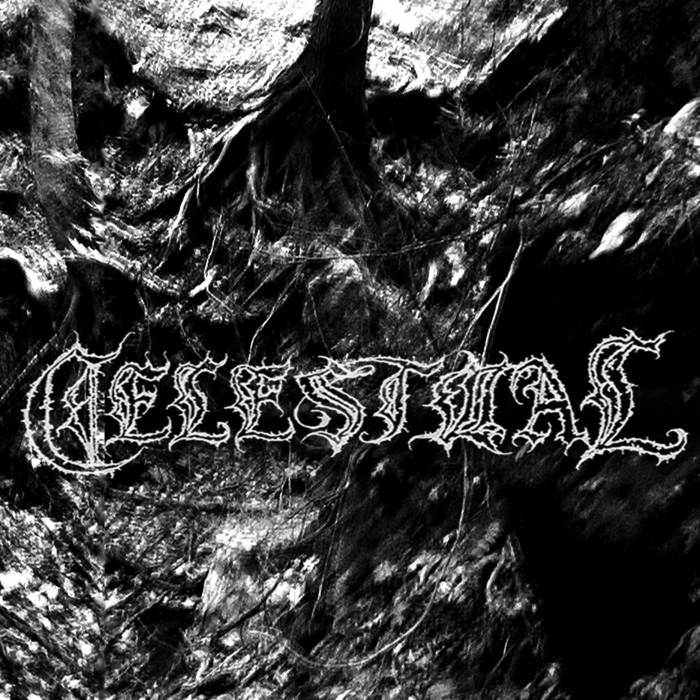
- Celestiial uses acoustic elements and field recordings to stage fragile nature-connectedness as an implicit critique of industrialization and modernity.
- Ego Depths, at the latest with the album Dýrtangle, engages in spiritual inquiry through Buddhism and an array of folk instruments from rattle drums to Tibetan flutes.
Typological Differentiation
Within the field outlined here, three ideal-typical manifestations can be distinguished, to be understood less as fixed categories than as structural poles:
- Universal Ritual Aesthetic
Projects like Ea operate on an abstract, de-culturalized level. Mythology here does not recur to concrete traditions or identity offers but is an aesthetically constructed meta-religion. The archaic functions as a cipher for transcendence and cosmic order, without being bound to ethnic or historical narratives. Rituality is generated formally—through repetition, monumentality, and sacred sound architecture—not through identity assignment. - De-Romanticized Archaization
Artists like Goatpsalm or Dryom draw on prehistoric or nature-related motifs but remove any harmonizing romanticization. Archaic scenarios appear indifferent, brutal, or existentially challenging. Nature here is not a retreat space of imagined wholeness but a hostile or indifferent environment. Myth is staged not as an identity offer but as an anthropological boundary experience. - Identitarian-Romanticizing Mythopoetics
A part of Ritual Funeral Doom works with concrete, culturally coded origin narratives. Archaic symbolism, cosmogonies, or geomythological references are aesthetically recombined and partially presented as implicit meaning offers. Here, the longing for primordiality condenses into imagined wholeness, reducing complexity and stabilizing identity. This form is not necessarily political but remains structurally amenable to ideological readings.
Differentiation Lines
Ea and Goatpsalm thus mark a counter-position to the romanticization of the prehistoric. Their prehistoric or mythological designs avoid concrete identity assignments.
- Ea creates an abstract, universal ritual aesthetic without cultural specificity.
- Goatpsalm formulates on Downstream an existential vision of ice-age survival—brutal, indifferent, de-romanticized. Similar boundary-pushers include Gospel of Death and Dryom.
- Gospel of Death employs a sustained crossover, close to Dark Ambient, from which the riff-linked category as Funeral Doom is already questionable. Its main instrument, an Appalachian dulcimer, appears in a connection between Funeral Doom and Post-Industrial. Its content orientation cannot be clearly determined, making the anonymous solo project a musical hidden gem between Ritual Industrial, field recording, sampling, and Funeral Doom.
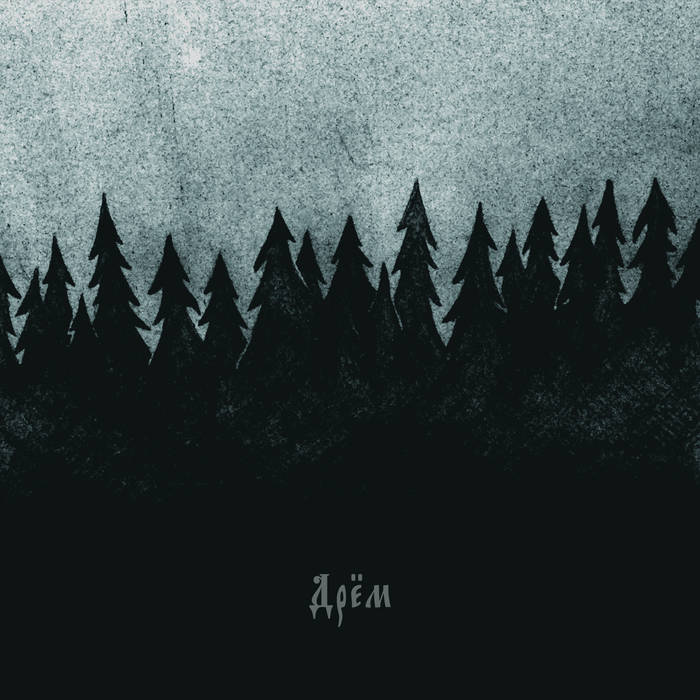
- Dryom (Дрём), in contrast, plays clearly within Funeral Doom, using jaw harp and flute, but, like Goatpsalm, refuses to romanticize the archaic, spiritual, or mythological.
In contrast, Ritual Funeral Doom becomes problematic where it suggests harmonious answers to questions of identity or nature-connectedness. The longing for primordiality solidifies into an aesthetic construction, reducing complexity in favor of imagined wholeness.
The flight into archaic myths resembles a reaction to experiences of loss of control in a cybernetic, highly networked society. The desire for a “natural” state springs less from historical reality than from the need for ontological security.
Thus, Ritual Funeral Doom reflects the dilemmas of a liquid modernity: oscillating between introspective search for meaning and ideological projection, it is a subgenre articulating both vulnerable inner life and antimodern longing.
Conclusion
Ritual Funeral Doom forms a tension field between introspective ritual aesthetics, existential archaization, and identitarian-romanticizing mythopoetics. The outlined types show that the subgenre is not monolithic: projects can choose universal, de-romanticized, or identitarian-coded approaches to archaization. The common focus remains on sacred-meditative structures and the aesthetic condensation of origin narratives. Its ideological amenability remains ambivalent: the music opens spaces for introspective search for meaning while remaining structurally open to multiple interpretations, without necessarily implying politically definite positions.