Ancient Masterminds
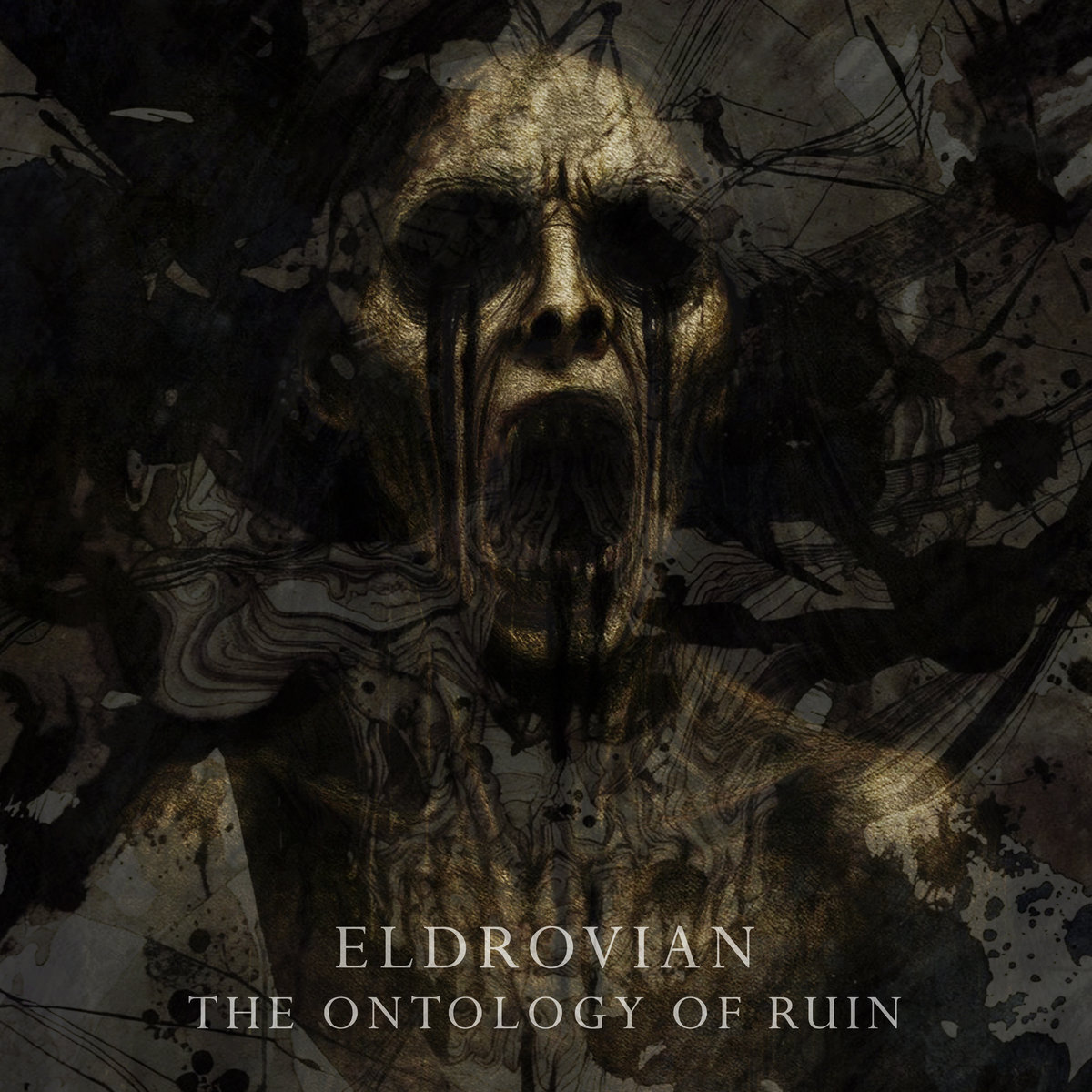
Are you into philosophy? Regardless of whether the answer is yes or no, eldrovian sure are. Their latest (December 2025) release and subsequent list-crusher The Ontology of Ruin is ideologically based on observations and scripts of the Stoics, especially Seneca, as well as his inspirational forethinker Epicurus, and their thoughts regarding the topic of death. Epicurus sees death as nothing to us – while we exist, death is not present, and when death is present, we no longer exist. Death, therefore, is nothing to concern us. Seneca reframed this: those who fear death see terror, those who contemplate it recognise a natural part of life. By reflecting on it regularly and accepting its certainty and inevitability, they are rather not taken by surprise once it comes, easing the burden, potentially even when loved ones are passing. It is within these philosophical quarters where The Ontology of Ruin is established, examining the states of being and nonbeing whilst begging the question whether those are really that different, or rather just two sides of the same coin.
A perpendicular descent
Opener Apparition enters with all the jazz one would expect – metaphorically speaking, not musically, please do not expect a sassy trombone or you might leave disappointed. Unsurprisingly mournful chord progression at a glacial pace, thundering drums that still sound somewhat mellow and not played with quite as much heft as one would expect. This, alongside the also rather unobtrusive vocals, is an obvious stylistic choice and conspicuous throughout the album: it allows the guitars to take center stage and shine in full splendour, which greatly benefits every song. An atmospheric organ and the most tragic, desolate guitar melody accentuate wretched gutturals. Those are menacing and powerless at once – not poorly executed, but deliberately restrained. They resemble the death cries of a gargantuan amalgamation of regret and mortal agony. The first ten minutes fly by before a key change subtly shifts the overall tone, resulting in a more funeral march-esque atmosphere. Towards the end, for the shortest of moments, even a glimmer of hope shines through. It is a classy first cut, elegantly transitioning into the second track after a brisk 15 minutes. The Stone starts with an even darker, more aggressive tone and stomping drums, invoking the image of death’s legions approaching to claim their prey. The lead melody deepens the dread – as if disaster were inevitable and everything already lost. It is an interesting choice considering the central theme of the album, yet it also reflects how the majority of people will generally approach this burdensome topic. The song meanders through its darkness, and a short halt around the middle is again met with the inescapable, grinding guitar riffs. Those and the organ are carrying the song, maybe the darkest chapter of the album, on their shoulders and are given lots of room to shine their dark light upon the listener.
There is plenty of variety on display, Remains/Mindlapse explodes into existence with menacing chugs and prominent war drums, malignant screeches echoing in the background. The song picks up the pace and runs with it, and through upper-class songwriting, gets into a frenzy: before you know it, the glacial pace makes way for a hasty, hectic, almost frantic second half. It is here where being and nonbeing collide fully and head-on for the first time, eroding each other’s boundaries, as if war over a soul had broken out. It evokes the image of a collapsing psyche, crumbling ever so slowly at first, then increasingly fast, catastrophically collapsing in on itself before long.
Philosophically challenging
Somatic Extinction is the aftermath of the collision – walls of sound caving in left, right, and center while mighty toms unterline the tremendous force under which the edges between existence and nonexistence blur and bleed into each other. Continuing the process, Oblivion’s Embrace enters with mournful keys which evolve layer by layer before almost dissolving completely, making way for harsh, droning guitars. As they return later, everything is constantly shifting. Layers are impermanent, fickle, almost hesitant about whether it is time for them to fade away or claw back into relevancy and desperately cling to existence. It depicts a battle we all face: the fight against decay, against entropy, against the certainty that we and everyone we love are drifting toward an end. In a way, I hate to bring this into a review – but not only is this funeral doom and we are all aware of the fact anyway, but also being reminiscent of it diminishes the terror.
A few twisted notes, scattered one-offs in the beginning, start to form a full melody soon enough, bleeding into the mighty chugs. It slowly disappears in the guitar walls and fades to naught, before returning at a later stage, when the overall decay of the song has proceeded and accelerated considerably. The album’s central theme is present in every corner of the record. Its monstrous, cavernous vocals deluge and wash you away with irresistible force. Terminal Substance, especially, is an artifice: shortly after entering its latter half, the song itself begins to disintegrate and subsequently die away – the structures loosen; like a body devoid of bones, the construct folds in on itself over several minutes – a fascinating and rewarding decision. It is here at the very latest where the concept is manifested exquisitely. The following Soul Residue acts as the abgesang, the farewell; like the last, fading thought of a dying mind.
Remains/Residue
There is no need for me to return to terms like “sorrowful” or “tragic” – we are talking funeral doom here, and such is the nature of it. Yet in eldrovian’s case, the execution in its monumentality and gravitas, rivaling the immersive weight of legendary Mirror Reaper. I have been working on this review for several weeks, and there’s a reason for that. Something always pulled me back, made me cross out my notes, and start a full listening and writing process all over again. I wanted to not only understand, but feel the essence of this album, and now I do. This is not a depressive fixation on transience, but an observation. Each drum hit and guitar strum becomes a solemn celebration of being and nonbeing. I would not call it indifference, but there’s a certain serenity to this album: nonexistence is undeniable, inevitable, non-negotiable. The Ontology of Ruin’s message could be reduced to but five words: you better deal with it. This is a masterstroke of an album, and it hopefully will get the attention it deserves.