In his book In the Dust of This Planet, Eugene Thacker starts from the thesis that “horror represents a non-philosophical attempt to think philosophically about the world-without-us.” Horror is the confrontation with the terror of one’s own insignificance. Accordingly, an atmospheric, literary, or musical adaptation of horror within a genre that simultaneously seeks the self as an aesthetic practice can be seen as a consistent connection to this non-philosophical attempt to reflect on the world-without-us. In this way, funeral doom aligns with the literary and cinematic genre. For in the uncanny, indeterminate, and incomprehensible, the subject recognizes the limits of the self and the presence of the world-without-us beyond those limits.
Horror: Impossibel Life
If one reduces the horror genre to a simple yet far-reaching formula, the term horror can encompass all fictional works intended to evoke fear, panic, dread, chills, as well as disgust and revulsion (in the subcategory gore) or fear and unease (in the subcategory terror) in their reception. In her analysis of the foundations and history of the horror film, presented in the 2004 Reclam Almanach of the Horror Film, Ursula Vossen wrote that the interest in horror as a mass phenomenon “is based on universal primal fears” but is “decisively rooted in the intellectual climate of the 19th century.” She traces a line from Nietzsche, Darwin, Marx, and Freud to Gothic literature, which absorbed and literary amplified the fears of an unsettled humanity, drawing on myths, legends, sagas, and fairy tales. According to Vossen, the societal transition to modernity required new myths, whose figures can be read as reflections of unsettled subjects—figures that mirror the loss of old certainties and the emerging fear of the unknown and uncertain, whether in the self, in others, in society, in nature, or in the afterlife.
On this basis, horror as a genre became a narrative of fear. While other fantastic narrative patterns drawing on the same precursors often foreground moral questions, horror narratives typically focus on the anxieties of their originating society. Horror can thus be understood as a form of making present the fears of a society, providing insight into the state of its civilizational development. Here, fear is thematized as an unceasing presence, whether on an epochal scale—as with H.P. Lovecraft—or in a contemporary context, as exemplified in the films Countdown or Bedvilled, which address fears of alienation through mobile technologies. Horror is thus a form of narrative immediacy, bringing societal uncertainties to the fore—including those that lurk in the shadows of cultural discourses. In this context, Vossen describes horror as “a ritualized expression of fundamental fears, aimed at distancing, controlling, and ultimately overcoming them.”
This naturally connects to music, particularly metal. From its inception, metal has had a close relationship with horror. The very name of the pioneering proto-metal band Black Sabbath was already borrowed from a horror film. Since the early days of metal and its subsequent scene, the connection between metal and horror has been evident—both commercially and stylistically. Metal often employed horror iconography, from cover art and mascots like Iron Maiden’s Eddie to the gore scenarios on album covers of death metal bands such as Cannibal Corpse. Commercially, this addressed a secondary audience; stylistically, both genres share core traits and themes. Bettina Roccor, one of the first to chronicle metal comprehensively, describes metal’s affinity for horror and gore as a continuation of earlier generations’ engagement with mythology and fantasy. From the 1980s onward, a shift toward grotesque, bloodthirsty, and morbid lyrics emerged. For the younger generation growing up with this music in the ’70s and ’80s, horror became the counterpart to earlier fantasy narratives—a captivating world in which all rules are overturned, reflecting societal upheaval and expressing the desire for provocation and cathartic compensation of negative emotions.
Postmodern horror goes beyond the classic scenario of supernatural evil or a physically threatening monster. Instead, terror unfolds within the individual, increasingly confronted with inner fragmentation and alienation from the world. Postmodern horror seeks to capture and process heterogeneous developments in culture and society. Fragmentation becomes part of the narrative, external constraints and uncertainties part of the dread. Directors like Takashi Miike and David Lynch, between Twin Peaks and Lost Highway, and between Ichi the Killer and Gozu, brought intertextuality, fragmentation, and radical subjectivity into the domain of horror. References to cosmic and existential dread, under postmodern conditions, become a vehicle for apprehending the world-without-us. Experimental works challenge childhood perception as a constituent of reality. Films such as The Powers of Madness, The Babadook, Sauna – Wash Your Sins, Under the Skin, or eXistenZ explore how the interplay between subjectivity and intertextual references to cosmic horror gives universal expression to existential dread and fragmentation.
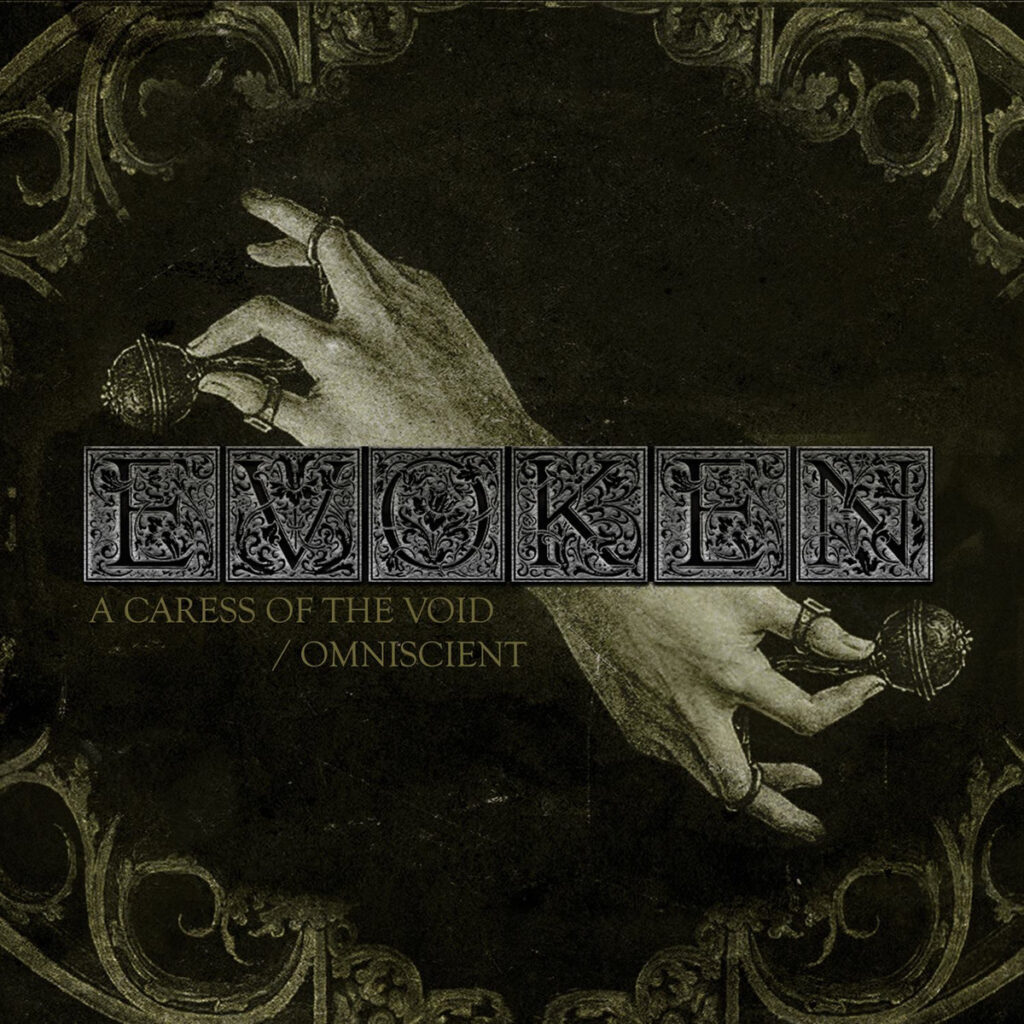
Musically, this cosmic and existential horror is exemplified in Evoken’s track A Caress of the Void, one of the genre’s most prominent representatives. The piece explores the dissolution of reality and confrontation with the incomprehensible. Within the catatonic soundscapes of droning desolation—monotonous hypnotic riffs punctuated by remnants of melody, especially keyboards drifting like winds over a fractured landscape—the band narrates with deep growls contrasted by sparse clean vocals, depicting the ‘threshold of awakening’ and descent into ‘abysmal galleries of fear-laden depth.’ The lyrics, in Lovecraftian vocabulary, address self-fragmentation and the sensation of drifting in a universe devoid of clear meaning. Evoken’s composition is both a musical reflection on existential fear and an aesthetic experience of the ineffable and uncanny cosmic calamity.
Here, the philosophical perspective of Thacker becomes relevant, as he discusses cosmic horror and the existential fragility of the self. He describes the cosmic uncanny as a form of terror that foregrounds not only the finitude of the individual but also humanity’s fundamental incapacity to develop a complete and coherent worldview—the awareness of the unthinkable. In Thacker’s conception, horror is not triggered by external threats but by the recognition that the universe itself is indifferent to human life. This terror arises from the subject’s awareness of its own incomplete and fragmented existence, experiencing a cosmic alienation that throws the individual self into the unknown. Levinas describes the Il y a—the “There is”—as a confrontation with the rawness of being itself, an experience in which the subject loses ordinary security and meaning, as the impersonal, elusive presence of being escapes consciousness and overwhelms the subject. The Il y a appears terrifying and oppressive in moments of darkness, silence, or solitude, pointing to the sheer fact of existence, devoid of meaning and absolutely indeterminate.
Horror in Funeral Doom
In the monotony and weight of funeral doom soundscapes, this horror can be experienced musically. The subject is plunged into a void that feels impersonal and indifferent. The horror of the uncanny confronts the limits of human perception and the unspeakable, uncontrollable forces of the universe. In this perspective, horror becomes an experience of the ontology of the incomprehensible—the subject is torn not only within its own life but also in the face of a universe offering neither mercy nor explanation. Fear is here an inner disintegration, driving the individual ever deeper into the abyss—a process reflecting the fragmentation of the self in the face of the cosmic uncanny. This self-reflective horror gains aesthetic form through funeral doom: the self is not only a victim of external conditions but is shaken in its very existence. The horror of the uncanny becomes a confrontation with the limits of perception and the inexpressible forces of the cosmos. This existential fragmentation is experienced both philosophically and musically, as the subject encounters the absolute and incomprehensible nature of the universe.
While Thacker understands cosmic horror as a loss of coherence and self, Levinas’ concept of the face of the Other as an unconditional ethical demand interprets horror as the absence of the Other or confrontation with an absolute Other. The absolute Other signifies a radical, incomprehensible alterity that exceeds the subject’s self-determination, compelling ethical responsibility without ever being fully grasped or understood. The ethical challenge of the absent Other lies not only in the Other’s absence but also in the infinite claim of the Other, forcing the subject toward responsibility and care, even if the Other is not physically present. In this absence—frequently thematized in funeral doom through expressions of isolation, loneliness, and grief—not only is the subject fragmented, but ethical isolation is also reflected, plunging the individual into a void. Encountering the Other forces the subject to transcend itself and assume responsibility by recognizing the Other’s existence and needs. The absence of a counterpart, the lack of an encounter with the Other, thus deprives the individual of a social dimension.
The horror of postmodernity arises from the loss of encounter. When the Other is absent, the ethical challenge and potential for transcendence are missing. The subject remains trapped in isolation, without a reference point that might compel self-overcoming. This absence leads to a state of existential void, where the individual is thrown back upon itself without orientation beyond its own fragmentation.
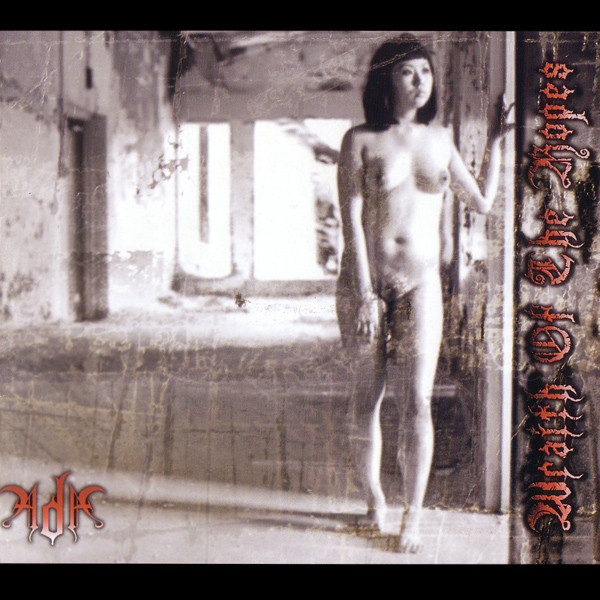
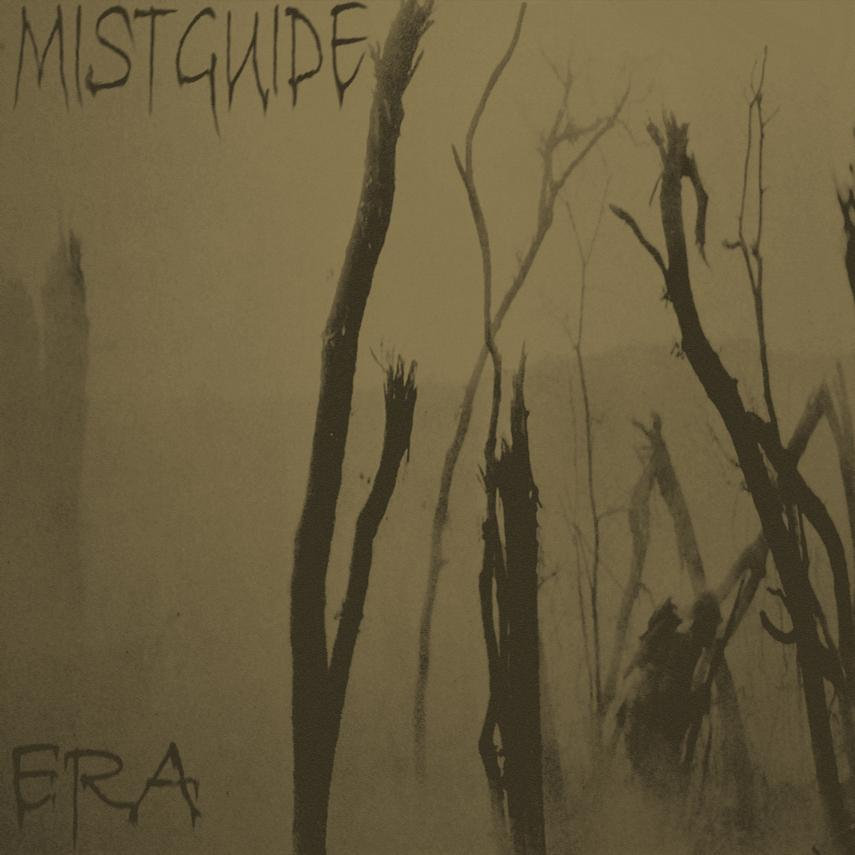
Contemporary bands demonstrate how horror can be placed seriously at the center of their music, showing that the genre possesses its own conceptual depth. Bands like MistGuide, Wraith of the Ropes, Usnea, Funeris, or The Liquescent Horror, have placed the thematic complex of fear at the conceptual center of their music. Beyond the usual and often ironically implemented exaggeration through tempo and grotesque radicality of lyrics common in death metal and grindcore, horror in funeral doom appears serious. Even provocative confrontation remains relatively low in the genre. For example, the album Ada by Wraith of the Ropes is tonally close to Wes Craven’s soundtrack work, yet the ghost story content tends more toward Anglo-Saxon Gothic fiction. Similarly, The Liquescent Horror varies ghost storytelling paired with amorous to erotic cannibalism, which can be compared to the vampires of Gothic fiction. The Liquescent Horror also draws on soundscapes borrowed from horror films—here, however, mainly the strings and piano tracks of some occult horror films. Both, meanwhile, deal with the terror of the unknown as if concerning a possible afterlife.
In texts by bands such as MistGuide, The Liquescent Horror, and Abstract Spirit, decay, death, and the failure of communication are central elements of this horror. The Other is either dead, unreachable, or perceptible only as a distorted, monstrous presence. This absence deprives the subject of the possibility of experiencing itself as part of a relational or meaningful network.
In tonal and lyrical aesthetics, horror manifests in the radical solitude of the subject. In the track Post Mortem from Abstract Spirit’s album Horror Vacui, the subject is cast back upon itself and plunged into the abyss of emptiness. The scream into the immeasurable night goes unheard; the subject is swallowed by an indifferent earth, without the possibility of ethical engagement. This absence of the Other becomes an aesthetic experience of cosmic horror, centering the subject’s fragmentation and finitude. The subject is alienated not only from the world but from any encounter that could lead to self-transcendence. This absence intensifies self-fragmentation, making horror absolute.
“Echoes of empty sounds,
Of alien words and phrases…
Another faulty stroke
On the endless canvas of emptiness”
(Post Mortem)
While Levinas describes encounter with the Other as the locus of ethical responsibility, funeral doom illustrates how the absence of this encounter leaves the subject in existential void. In this world, the ethical dimension of life becomes impossible. Funeral doom thus thematizes not only cosmic alienation but also the ethical isolation that leaves the subject fragmented and lonely.
Hence, funeral doom makes clear how the absence of encounter plunges the subject into existential emptiness. In a world where the Other no longer appears as a humanly identifiable entity but is absent or distorted, the ethical dimension of existence lacks resonance. Tracks such as A Caress of the Void or Horror Vacui thematize cosmic alienation and ethical isolation of the subject.
In this new variant of horror, which centers on loneliness and the decay of the self, fear is an inner disintegration, plunging the individual ever deeper into the abyss. The notion of a stable, coherent self is torn apart by contradictions between inner needs and internalized external expectations. Søren Kierkegaard describes the self’s rupture between abyss and fear as the fundamental struggle of human existence. Fear of nothingness, in his view, is a fundamental trait that forces continual self-definition and decision-making. The subjective dimension of postmodern horror can thus be understood as an expression of this existential fear.
In works addressing both the horror of the self and the cosmic, indeterminate dread—as reflected in slow, oppressive structures of funeral doom or in some dissonantly intense black metal compositions—horror becomes an indirect confrontation with the subject’s fragmentation. In unknown, inexplicable, and terrifying circumstances, the subject discovers the limits of perception, and thereby the boundaries of the self. In the musical aestheticization of horror in funeral doom, the fundamental nature of fear is directly linked to the perception of one’s own fragility and finitude.
In funeral doom, horror is more than a play with terror and chills. It becomes an existential experience confronting the subject with the fragility and fragmentation of the self. The music and aesthetics of funeral doom render cosmic dread and ethical isolation tangible, leaving the individual alone and broken in a world without clear meaning. Fear of nothingness, existential emptiness and rupture, and a state of alienation and loss find their mirror in the aesthetic practice of horror. In this musical engagement with horror, the self confronts its own fragility and finitude, compelled to question its meaning and place in the universe.
Uncontrolled Life: H.P. Lovecraft
“Things of inconceivable shape, they implied, had reared towers to the sky and delved into every secret of Nature before the first amphibian forbear of man had crawled out of the hot sea three hundred million years ago. Some had come down from the stars; a few were as old as the cosmos itself; others had arisen swiftly from terrene germs as far behind the first germs of our life-cycle as those germs are behind ourselves.”
(H.P. Lovecraft: The Shadow out of Time)
H.P. Lovecraft is, alongside J.R.R. Tolkien and R.E. Howard, one of the most significant literary sources of inspiration in metal. While Tolkien, though previously received, primarily influenced the atmosphere, self-presentation, and lyricism of black metal, Lovecraft—especially atmospherically—shaped funeral doom like no other writer. His wooden-Victorian narrative style, which often relies on simple means to create a skillfully staged scenario, was decisive for the genre. The world Lovecraft described was permeated by nameless and indescribable horrors that always lurked beneath the surface of his protagonists’ lives and made them aware that they were small and insignificant, facing a world they could not comprehend. A world of the incomprehensible and uncanny, of cosmic doom, indifferent and often unfathomable.
Lovecraft’s work can be seen as a place where Thacker’s world-without-us and Levinas intersect. Levinas’ idea of the uncanny or terror is not part of his central terminology but emerges ethically and existentially from his ontology. Terror arises in Levinas when the subject is confronted with the absolute Other or the Il y a—a presence that cannot be rationalized or controlled.
Lovecraft’s work is imbued with an existentialist and nihilistic worldview, emphasizing the fundamental insignificance of humanity in the face of a merciless and incomprehensible universe. It combines cosmic alienation with the existential and ethical fragmentation of the subject. Similar to Sartre and Camus, humans are not depicted as shapers of their world but as lost individuals unable to find meaning. This nihilistic worldview resonates in funeral doom, where humans are recognized as part of a cosmic fate that offers no salvation or hope. The genre not only repeatedly articulates the end of human existence but also foregrounds the absence of any hope or redemption.
The loss of anthropocentrism—the notion that humans are the center of the universe—is one of the central fears in Lovecraft’s work. In a time of scientific revolutions that reshaped understanding of the world, Lovecraft portrays humanity as insignificant in a vast, chaotic universe. Humans become weak objects whose existence is determined by larger, more powerful, and often hostile realities.
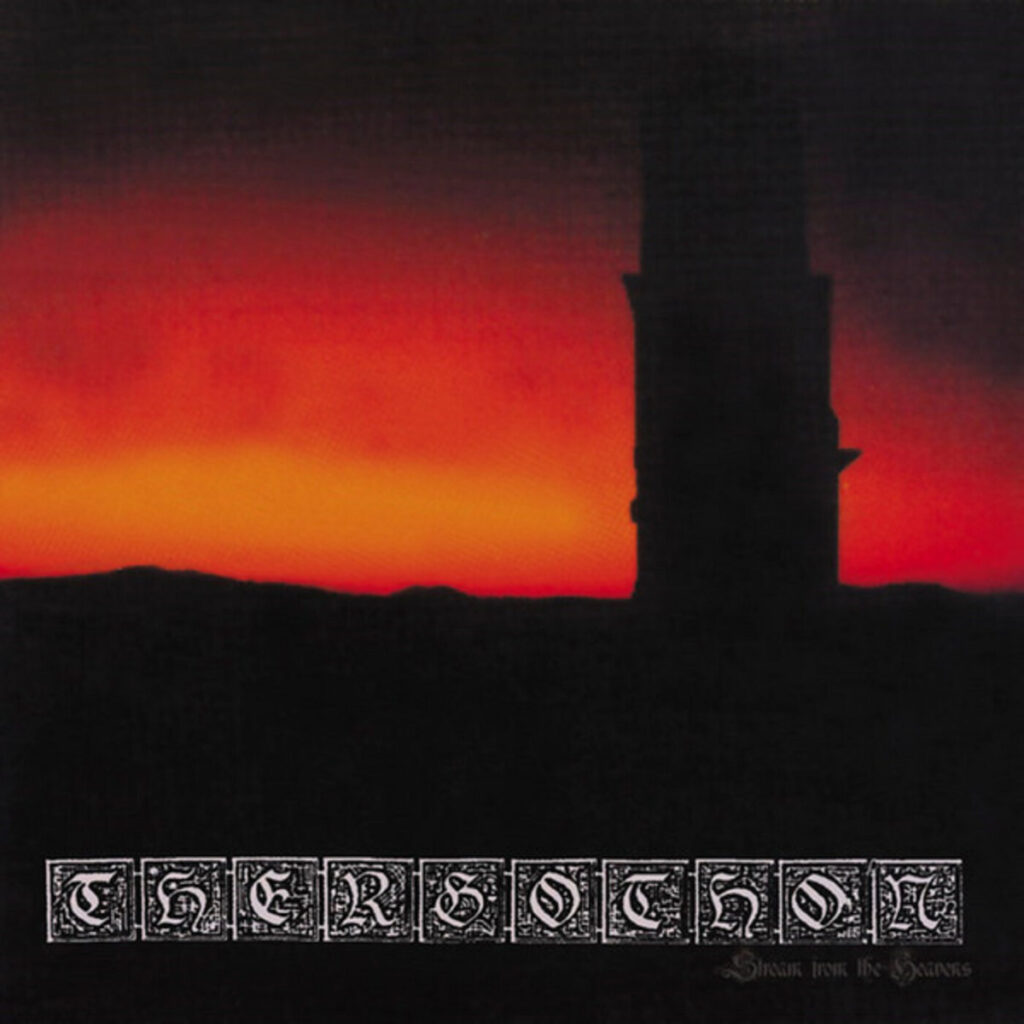
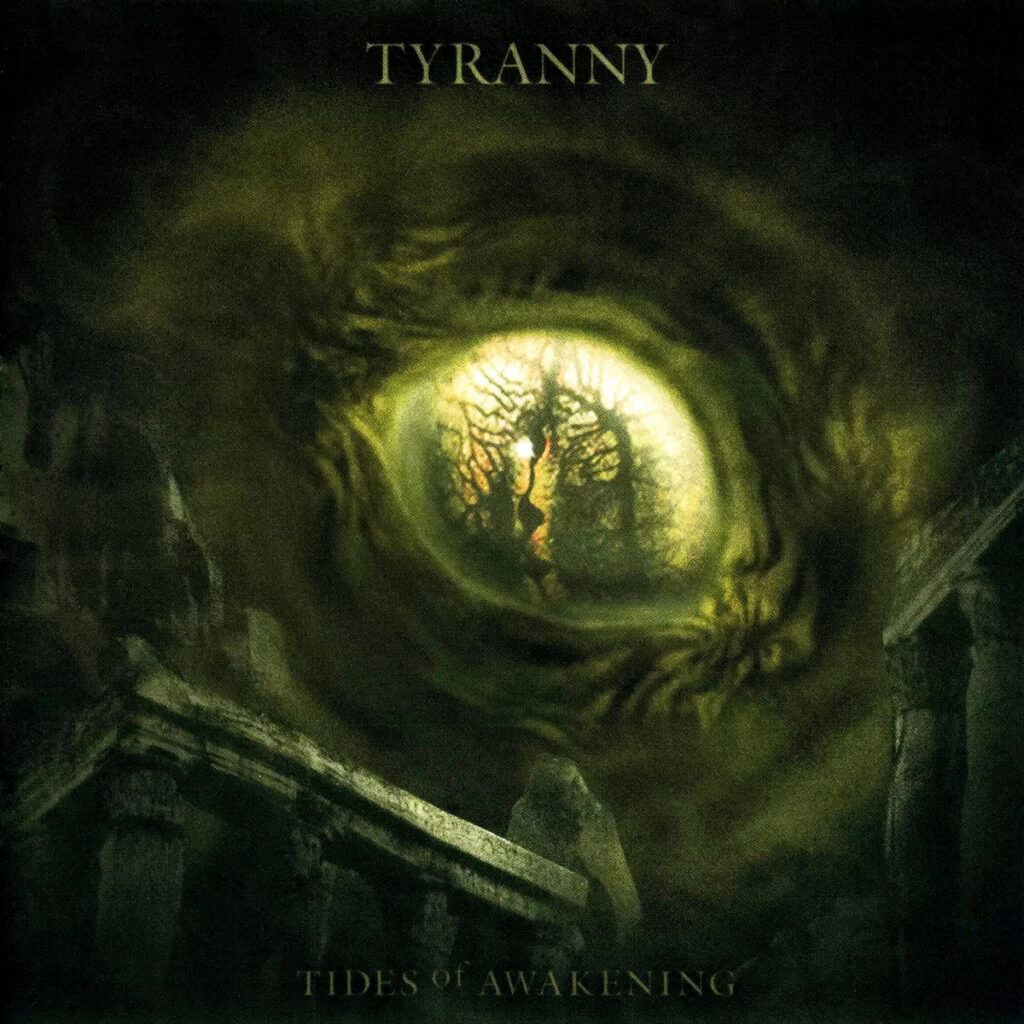
This perspective of the loss of human centrality in an immeasurable, cosmic universe can be directly transferred to funeral doom. Texts and music evoke the impression that the individual is trapped in a universal whirlpool of fear, despair, and doom, subject to uncontrollable tides. Performers like Innzmouth, Tyranny, or Thergothon let their monotonous sound collages be permeated by the same cosmic powerlessness that Lovecraft depicts in his stories: hope for control or salvation remains unattainable—the music mirrors the threat and indifference of Lovecraft’s universe.
Lovecraft’s creations are manifestations of the frightening realization that the world-without-us is not only incomprehensible but, above all, renders the world-for-us insignificant. The cosmic horror he describes is the horror of realizing that there is no divine order, no morality, no overarching meaning, and that the grand narratives of religion and science cannot answer all existential questions. What appears as cosmic horror in Lovecraft’s work is the immense void of the universe described by Thacker, which perceives humans merely as tiny, fragile parts of an unending, apocalyptic cosmos. These philosophies find direct expression in the threateningly cosmic, synthesizer-generated dark-spherical sounds that bring funeral doom close to ambient, as performed by groups such as Opaque Lucidity, Arcane Voidsplitter, and Gruulvoqh.
Other bands like Tyranny and Catacombs play with intricate, slowly developing rhythms that combine a touch of the organic, repetitive yet never redemptive structures, as well as the nearly unbearable density of the music, reflecting the boundless alienation depicted in Lovecraft’s horror world.
Lovecraft’s dry, brittle, and old-fashioned writing style often denies the reader insight into immediate events, causing the reader—like his protagonists—to stumble unknowingly through occurrences. Lovecraft’s admiration for Edgar Allan Poe played a central role in this narrative pattern and contributed to his unique horror—a horror largely nourished by uncertainty.
Comic and novel author Alan Moore described Lovecraft as “the perfect average man,” who precisely expressed the fears of white, heterosexual, Protestant-socialized male middle-class members toward change and modernization while considering himself an outsider. This perspective can certainly be understood as an archetype of the New Right—as a fatalistic and apocalyptic fantasist who, faced with his own loss of relevance, perceives the world as plagued by fear and already consigned to the abyss. This imagined awareness of the imminent end, a threat from everything beyond one’s sphere of influence, and his stories from a world close to, yet not identical with, his own, point to Thacker’s profound sense of human insignificance.
Lovecraft and Funeral Doom
The atmosphere, marked by an omnipresent fear of loss of control, collapse, and disappearance, traces back to Kierkegaard and Levinas. The fear permeating Lovecraft’s works radiates particularly from the allegorical super-sites of divine presence: space, the open sea at night and in storms, the primeval forest, nature, or underwater. These themes offer the genre a significant point of connection—even without ideological overlay—alongside the aspect of slowly told and barely resolved horror. The sea, above and below, is particularly present in funeral doom bands like Drown, Slow, or Abyssal.
However, Lovecraftian fear testifies not only to the anxiety of the blind conservative but also to the feeling of lingering in a dying world and encountering one’s own insignificance in an unimaginable, uncontrollable reality. The individual senses and fears the loss of their reference points. This loss of meaning and identity in the face of an incomprehensible and indifferent world transitions into the central ethical and existential questions of Levinas and Kierkegaard.
In funeral doom, the mention of bands such as Tyranny, Catacombs, and Thergothon—who convey the same dark, apocalyptic mood in their music that Lovecraft describes in his narratives—is essential. It is the feeling of being driven toward one’s own annihilation in one’s own reality.
Lovecraft can also be described as an anti-Jules Verne; his worlds are not oriented toward visions but toward decay, destruction, and inevitability. In his stories, characters are not creative shapers of their world but helplessly subject to the tides of a far larger and stronger reality—a world-without-us. These themes are captured in funeral doom music, particularly by bands such as Abysmal Growls of Despair or Catacombs, whose grindingly slow, monotonous rhythms and minimalist structures convey the sense of the inevitable and the incomprehensible.
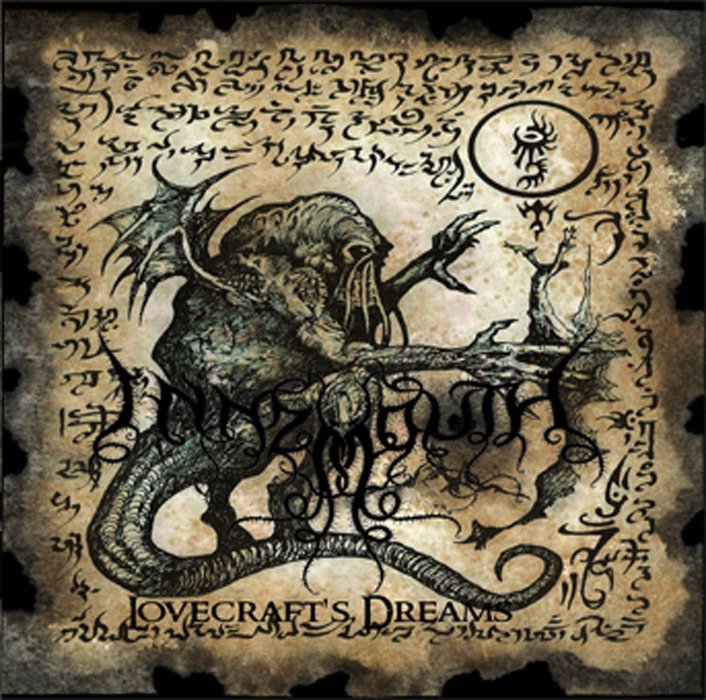
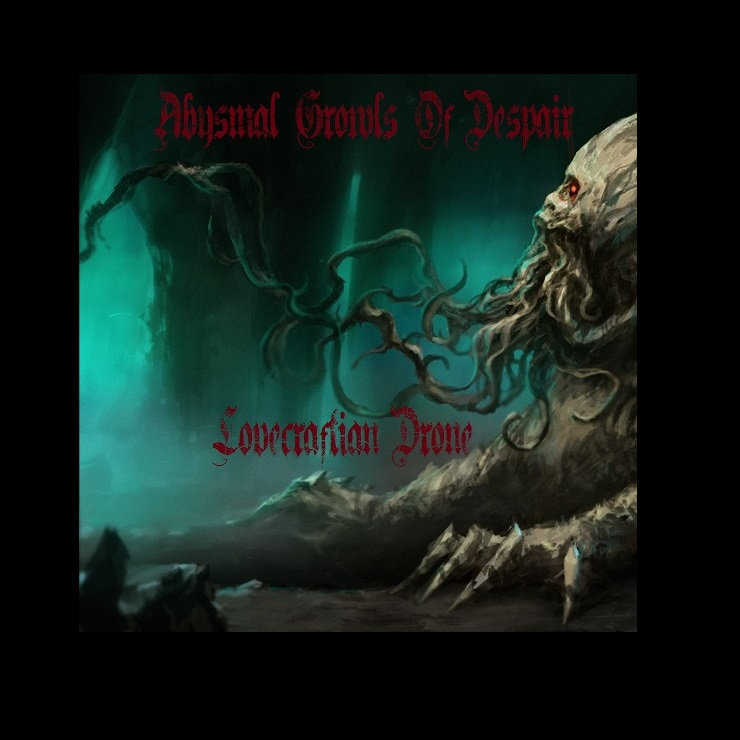
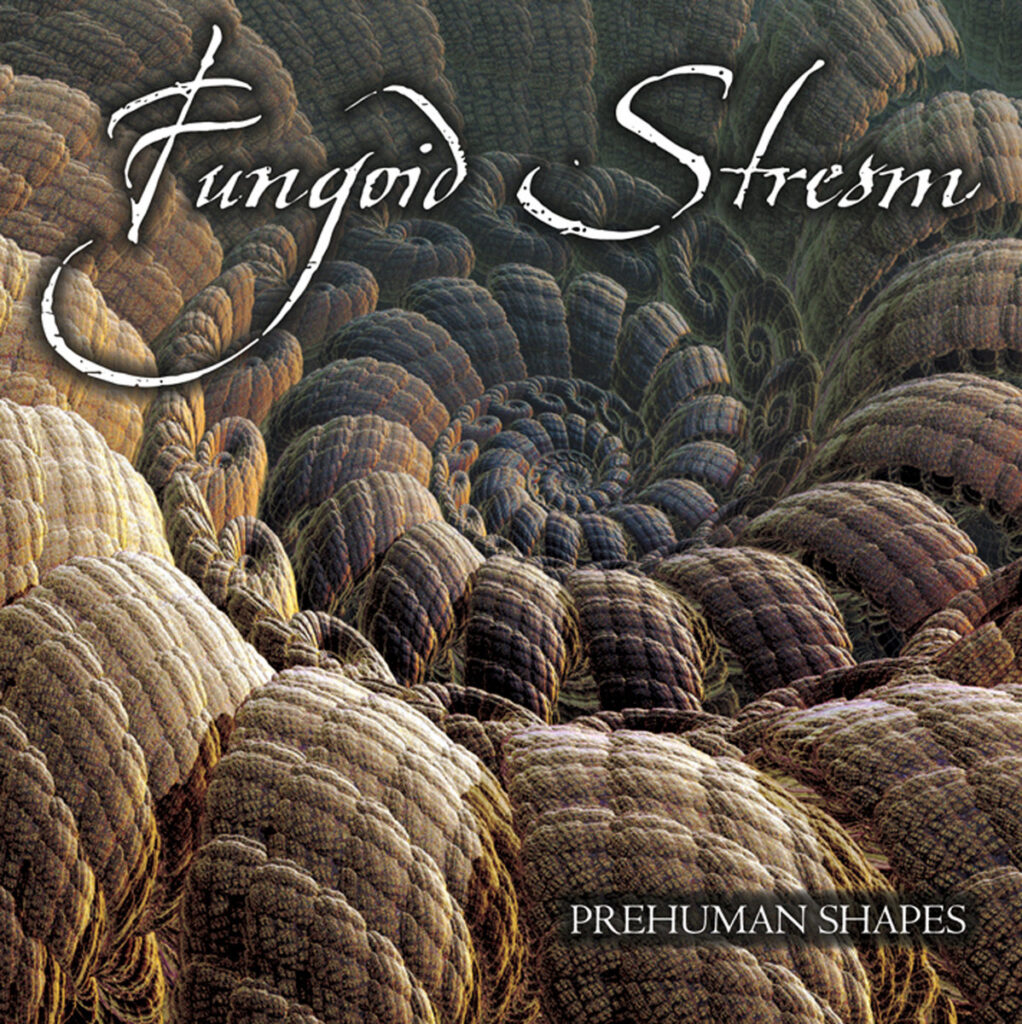
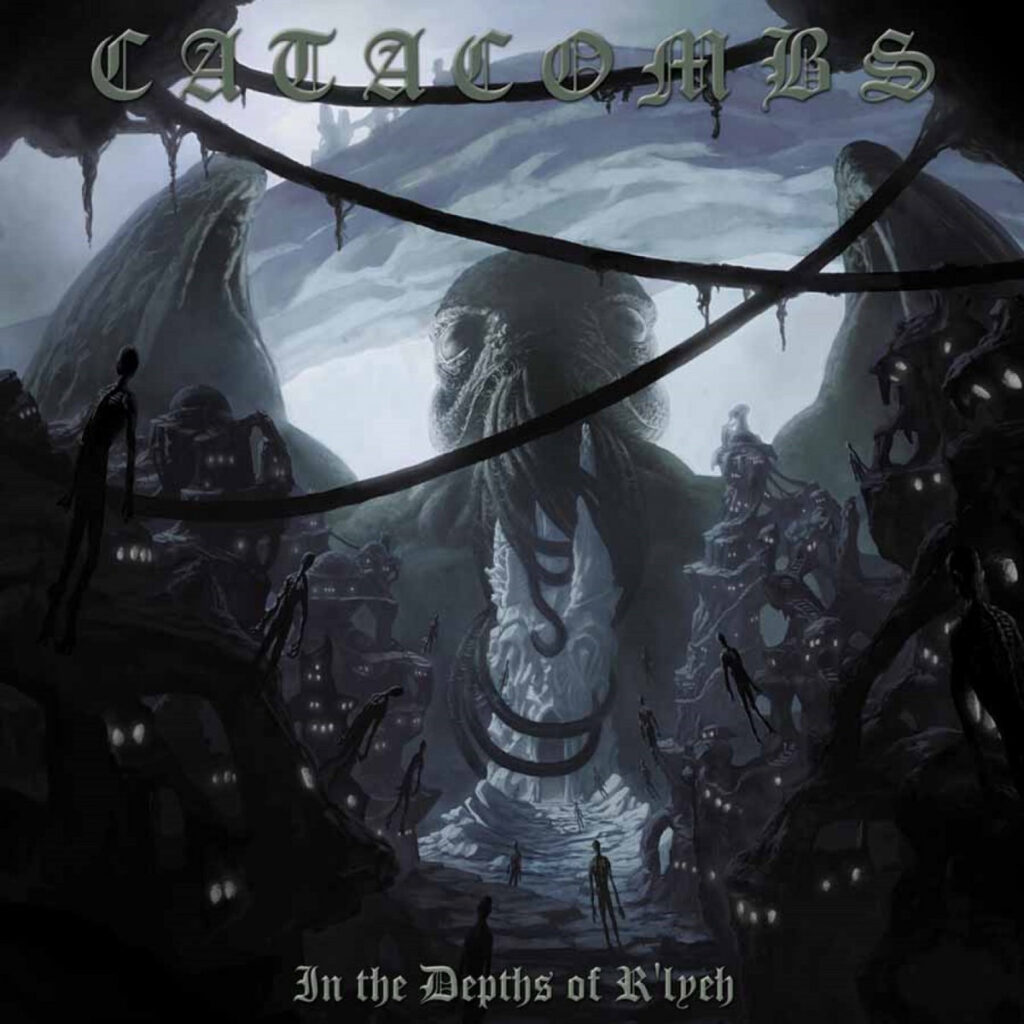
Concept albums like Prehuman Shapes by Fungoid Stream, Lovecraftian Drone by Abysmal Growls of Despair, or In the Depths of R’lyeh by Catacombs directly draw on Lovecraft’s work, lyrically and musically interpreting the dark history of Cthulhu and his terrifying, apocalyptic presence. Through radical minimalism—guitar, bass, and drums—the bands create an atmosphere of threat, uncertainty, and danger that not only recalls Lovecraft’s stories but extends them in oppressive monotony. While Fungoid Stream and Abysmal Growls of Despair use direct descriptions and quotes from the Cthulhu mythos, In the Depths of R’lyeh approaches the theme more circumstantially. In the lines of the album, Catacombs speaks of an awakening that is both warning and hopeful, making Cthulhu’s threat tangible. Musically, In the Depths of R’lyeh and Lovecraftian Drone are particularly similar—each a nihilistic and Cthulhu-mystical work dripping the feeling of fear and threat, like slime from millennia, into the ear.
Here, it is not only about the horror of the terrible, supernatural powers Lovecraft describes but also the confrontation with one’s own hidden fears, aggressions, and malevolence. The person Hangsvart, behind Abysmal Growls of Despair, suffers from depersonalization, derealization, and schizophrenia, plagued by hallucinations of a world filled with the dead and monsters. His music can thus be read as a direct engagement with his illnesses, while also pointing to generalizable aspects of such a struggle. The confrontation with darkness corresponds to the struggle with one’s own inability to control life and the self, in the face of higher, incomprehensible external forces in Lovecraft and internal forces in Hangsvart.
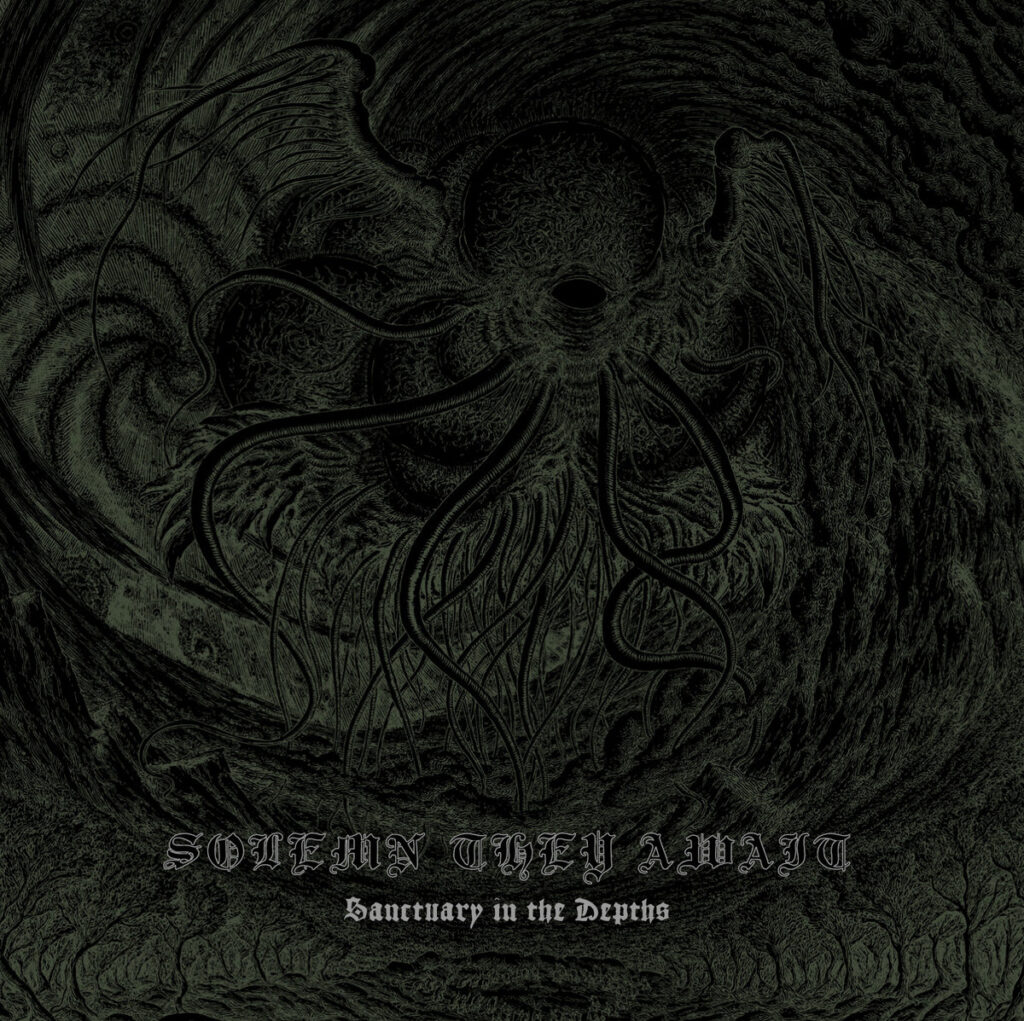
Similar to Lovecraft, who emphasizes the inevitability of destruction in his apocalyptic vision, funeral doom takes up the end of the world, of the self, of one’s own subjectivity, and especially the absence of any control as its theme. In the music of the band Solemn They Await, this theme is explored by providing a lyrical and atmospheric narrative tracing the dark, endless journey through Lovecraft’s world. With tearing waves, massive riffs, and operatic vocals of apocalyptic funeral doom, a sense of futility and inevitable doom arises—a voyage through Lovecraft’s world in which horror never ends.
Thus, Lovecraft is not only quoted in funeral doom but also becomes a significant reference point for dark-nihilistic narratives addressing the unstoppable decay of human existence. Lovecraft’s work finds a correspondence in funeral doom. His stories and funeral doom materialize a world that cannot be comprehended and confronts us with the terrifying truth of our own inability to control our lives.
Lovecraft’s cosmic horror simultaneously points to the longing for retreat and security in the face of an incomprehensible world. Loss of control, being lost, and one’s own insignificance lead to escape into ambivalent spaces—places offering both protection and threat. Nature becomes such a space, a site of simultaneous revelation and confrontation.