Sacramento‘s funeral doom powerhouse are Dan Aguilar (guitar/vocals) and the multi-instrumentalist Patrick Hills (drums, bass, synths, backing vocals). The album was released on November 7, 2025, and it‘s their second album, following the success of their self-titled debut. The Sinking Isle spans three monolithic tracks for a total playing time of 43 minutes. The sound is characterized by transcendent guitar harmonies and massive, ethereal, mind-bending soundscapes.
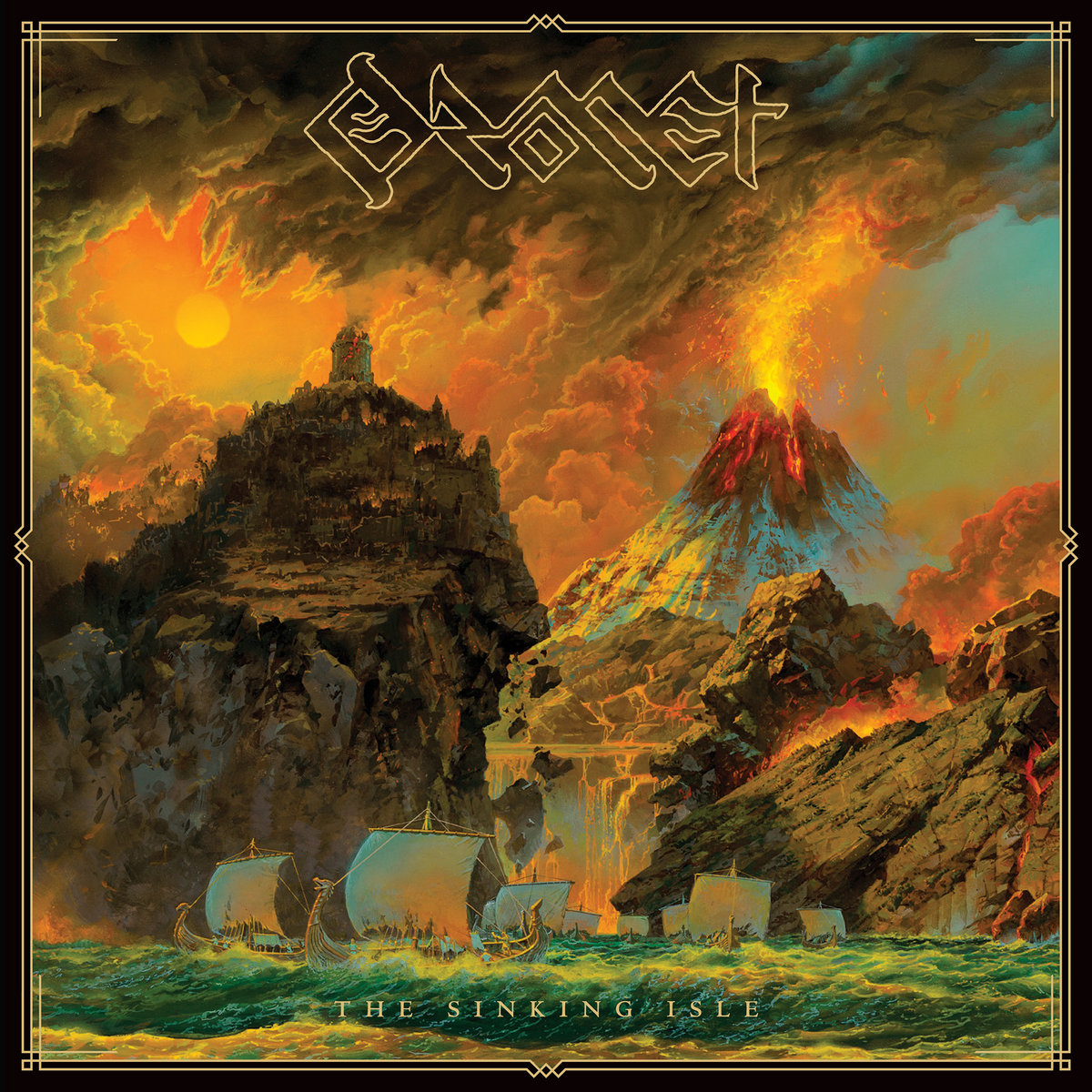
The conceptual basis of the album evokes cycles of collapse, ruin, rebirth, loss, nostalgia, and pessimism, and Ted Nasmith‘s cover art captures these themes wonderfully, with a volcano erupting in the background while ships sail away from the shoreline in a seeming exodus from a collapsing world ravaged by the fury of nature. The wavy green ocean seems threatening but also inviting, as humanity flees from one natural threat by diving into the next. The imagery gives Tolkien-vibes, reminiscent of sinking Númenor, visually speaking. As the band notes, the melodies serve as the compass and guide the listener through macro (global/environmental) and micro (personal) despair, emphasizing the duality of sorrow and acceptance.
The album opens with peaceful acoustic guitars and droning rain (or river?) samples, before the drums suddenly kick in subtly with incredibly precise cymbal hits. Shortly after that, crushing guitars take over, anchored by clean & organic bass slides. The vocals are at the same time deep and raspy, and the lead guitars are mournful yet hopeful at the same time; at times they feel almost heroic, like struggling through tragedy and somehow rising above it… or at least trying to. Throughout the album, the transitions between the vocal and instrumental passages are pretty seamless, with some tight drumming (especially standout tom work) and dynamic vocal range that spans the scale all the way from subdued murmurs to defiant cries filled with conflict and angst. The organs and synthesizers add a lot of tension and atmosphere, which expand on the calm flowing motifs of the album‘s opening. The heroic leads swell in between the vocal lines, woven together with fuzzy rhythm guitars, creating extremely dense and interlocking melodies. Some nice ambient and industrial-ish synth passages bring a sense of closure and weirdly serenity, while groovy bass guitar interplays add subtle movement, sometimes reminiscent of Ahab in terms of the groove.
Moments of quiet reflection are on display here and there throughout the album, contrasting with eruptions of distorted intensity, heartbeat drum patterns, and soaring leads, creating hypnotic cycles of tension and release. The album closes on clean, distant, drifting guitars, which leave the listener with a lingering sense of melancholy and mystery.
Hills‘ immaculate production blends rock-breaking heaviness with ethereal mysticism, which gives every instrument ample breathing room. In terms of the sound, there is a hint of Mournful Congregation‘s grandeur, Bell Witch‘s brutal immersion, and Ahab‘s nautical doom, although it doesn‘t really sound like any of them. Oromet have their own distinct sound: funeral doom that feels both tragic and hopeful, as well as crushing but still strangely uplifting.
One of the standouts of 2025—funeral doom for listeners who want emotional depth, mythic atmosphere, and melodic heroism to accompany their sorrow.