Ambient Funeral Doom is a subgenre of Funeral Doom. Soundscapes associated with ambient and dark ambient dominate the sound. The metal typical elements dissolve into repetitive, often reverberating riffs, a programmed, simple drum track, and a barely present vocal delivery, usually very deep gutturally growled and mixed into the background, consisting of few lines of text. The music thus remains largely unvaried, oriented toward a bleak, empty, and dismal atmosphere.
History of Ambient Funeral Doom
The subgenre developed as a current within the second generation of Funeral Doom. Its emergence is closely tied to the technical and social changes of the early 2000s. While the first generation of Funeral Doom laid the aesthetic foundations of the genre in the early 1990s with bands such as Thergothon, Skepticism, Esoteric, and Funeral, the focus in Ambient Funeral Doom shifted about a decade later, moving away from the further development of classic Funeral Doom and toward a consistent reduction of its musical means. That Niko Skorpio of Thergothon and Alexey Lapshin of Voj turned to dark ambient after the end of their bands perhaps illustrates that the proximity to ambient and dark ambient was already part of the genre’s DNA before Stijn van Cauter recorded his first piece. That Kostas Panagiotou of Pantheist conversely took the path from dark ambient into Funeral Doom confirms this proximity that existed between the two from the very beginning.
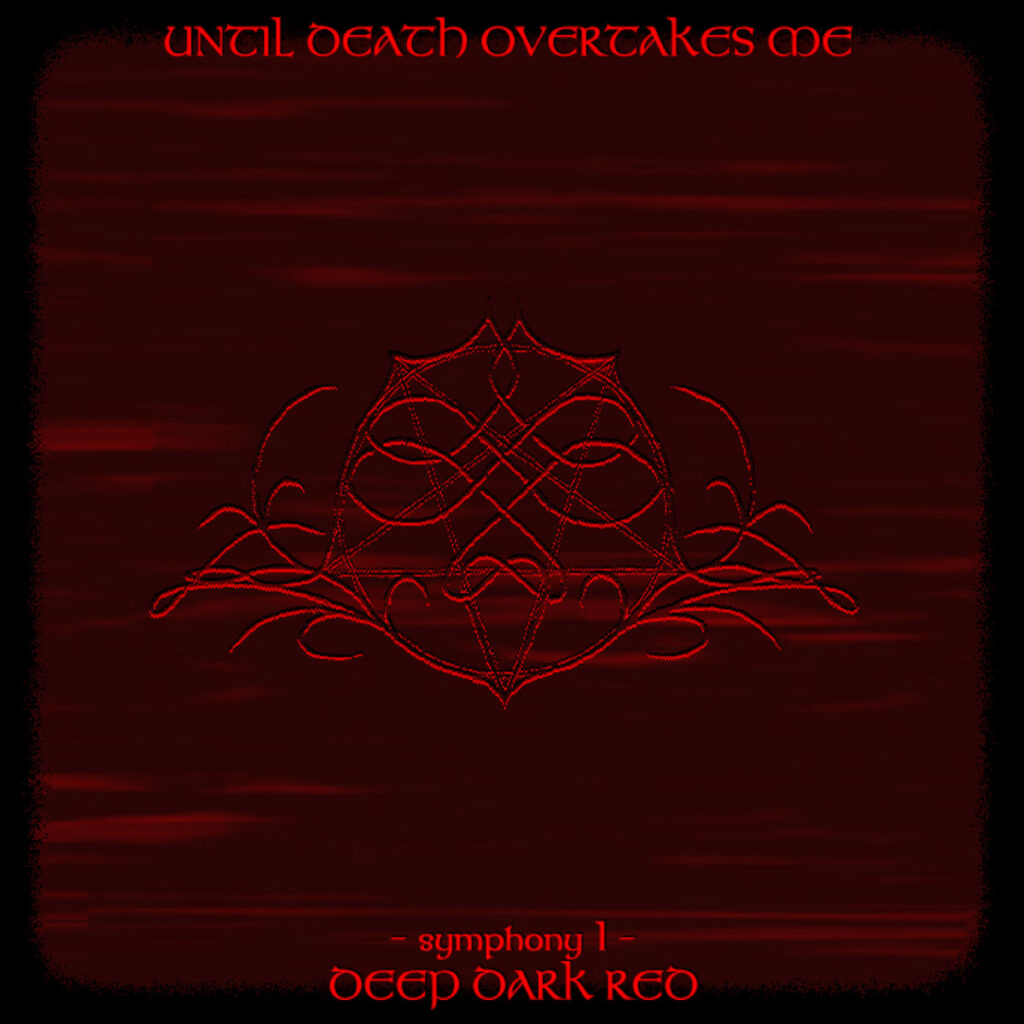
Among the most significant forerunners, alongside the usual suspects, should also be counted the Polish duo Ysigim and the American solo project Hierophant. Both did not yet embody the time dissolving depth that Ambient Funeral Doom would come to embody, yet the reduction of dynamics and mobility as well as the connection to dark ambient already achieved a new quality in their work. As the central figure in the emergence and spread of the subgenre, however, Stijn van Cauter should be recognized. With Symphony I – Deep Dark Red by Until Death Overtakes Me, he created in 2001 the album that may be regarded as a landmark of the subgenre. Deep Dark Red thus carried all the trademarks that continue to shape the genre to this day:
Ultra slow, even relative to other doom outpourings, minimalist, and noticeably close to the dark wave of the late 1990s. The slowing down of the ur bands Thergothon and Skepticism, combined with radical simplicity (and downright cheap equipment), created a music that has since oscillated between atmosphere and kitsch, cosmic horror and a peculiar form of functional music. The very same soundscapes capable of conveying existential emptiness and cosmic indifference also possess, at the same time, the potential to become mere background filler. Imaginary planetariums, or in less successful iterations even elevators, suddenly appear as conceivable venues for it.
Over the decades, van Cauter also created further bands (The Ethereal, Beyond Black Void, Arcane Voidsplitter, Inframonolithium) as well as an important label of the genre’s peak period (NULLL Records), which deliberately championed precisely this kind of music.
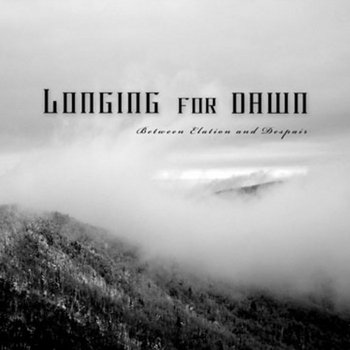
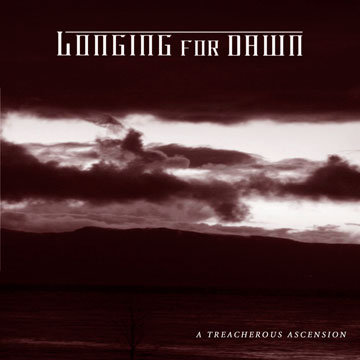
The temporarily most popular group devoted to Ambient Funeral Doom, however, remained the Canadian duo Longing For Dawn, whose music, lavishly sparse, built on bringing together ambient passages and the heaviness of Funeral Doom. In fact, from around the middle of the first decade of the new millennium onward, there existed a barely surveyable mass of projects turning to the style.
Fungoid Stream and Opaque Lucidity shifted the emphasis further toward dark ambient, Catacombs and Catacombed emphasized the monolithic quality, while Abysmal Growls of Despair, Ceremonial Buryment, and MDP gave significance to the voice as an instrument and turned increasingly toward madness and horror. Rostau, I Chaos, The Cold View, No More Sorrow in Me, or Dogme reproduced the stylistic formula across widely varying national scenes, which produced its own musical nuances. And it was precisely this abundance of similar projects that contributed substantially to the term “Bedroom Funeral Doom” establishing itself as a pejorative, against and despite the quality many of these projects in fact possessed.
For many representatives of Ambient Funeral Doom were not classic band projects but one person projects, whose entire composition, recording, and production took place in private home studios. The technical possibilities of digital multitrack production favored a music that relied less on the interplay of several musicians than on carefully layered soundscapes, expansive reverb spaces, and slowly unfolding atmospheres. The frequent use of drum machines was both an expression of a stylistic decision and a consequence of the production conditions at once, and it quickly developed into a characteristic component of the sound.
Although the projects differed in their individual expression, they were nonetheless united by a shared aesthetic disposition, one that radicalized the atmospheric character of early Funeral Doom while consistently pulling back its melodic and dynamic elements. The atmospheric elements that had already been characteristic of Thergothon and Skepticism moved here into the center of musical expression, while melodic developments (as in Shape of Despair), dynamics, contrasts, and more complex song structures (as in Esoteric, Mournful Congregation), or guitar dominance (as in Evoken) receded.
Social Construction of Technology
This development ran parallel to profound changes in music production. Powerful home computers, affordable recording software, and virtual instruments enabled a growing number of musicians to produce complete albums independently of professional studios and fellow musicians.
Just as significant as the new means of production were the possibilities the internet offered for networking an internationally scattered scene. A central role here was played by the forum of the website Doom Metal.com, which by the mid 2000s had developed into the most important communication hub of the international Funeral Doom scene. Here musicians, listeners, and label operators came together, discussed new releases, exchanged demos, and forged collaborations. Ambient Funeral Doom thus did not emerge within a regionally bounded scene but rhizomatically, as a genuinely transnational phenomenon of digital subculture. The shared aesthetic orientation arose less through personal encounters than through continuous exchange within an internet based community.
Ambient Funeral Doom therefore emerged neither solely from technical innovation nor solely from musical creativity. Rather, the subgenre developed through a reciprocal process, in which digital home studio technology opened up new aesthetic possibilities while the scene simultaneously appropriated these technical means in a way that exceeded their original function. Technology shaped the music, but the music equally shaped the cultural meaning of the technology being used. Wiebe Bijker and Trevor Pinch call such interplay the Social Construction of Technology, and they argue that technology does not simply succeed on the basis of its technical properties. Its meaning arises only through the social groups that use it in differing ways. For Ambient Funeral Doom, this means concretely: home studio technology made one person productions possible, but it did not automatically produce the genre. Only a scene and its network used this technology in a very specific way and, building on that, disseminated a music that would previously have been hardly possible: reverb was used as an aesthetic space, virtual instruments and drum machines were not simply accepted but became a load bearing component of the genre. Technology thus acquired, within this subscene, a new musical, cultural, and economic significance. In particular through the forum of the webzine Doom Metal.com, through which the music spread and musicians, listeners, and labels found one another in virtual space.
Musically, the new current deliberately set itself apart from those Funeral Doom bands that, from the late 1990s onward, developed the genre in an increasingly melodic, dynamic, and orchestral direction. Groups such as Evoken, Shape of Despair, or Worship advanced Funeral Doom through differentiated guitar arrangements, pronounced melodic lines, and greater dynamic arcs of tension. Ambient Funeral Doom, by contrast, took the opposite path. What became characteristic was a far reaching reduction of musical events in favor of static sonic spaces. Repetitive, often only marginally varied guitar riffs formed the foundation of the pieces, while melodic lead guitars nearly disappeared entirely. Synthesizers and keyboards took on a load bearing function, generating expansive soundscapes reminiscent of ambient and dark ambient, which often formed the actual center of the composition. The vocals were mostly limited to a few, deeply guttural delivered lines, mixed strongly into the background, producing less semantic content than atmospheric density. The music deliberately dwelt in a far reaching lack of events, aiming to produce a desolate, empty, and time displaced atmosphere.
With the rapid growth of the scene, however, criticism also arose from within its own ranks. The pejoratively used term “Bedroom Funeral Doom” denoted the growing number of one person projects accused of merely reproducing established stylistic traits schematically and with little quality. The criticism was directed against the lack of exchange, against the absence of social control, and against the missing procedural development of the pieces within a group. Yet the criticism was ultimately aimed less at home production itself than at the perception of a stylistic uniformity, one that was at times intentional. Indeed, many projects followed a pronounced minimalism: the slowest tempos, monotonous riffing, largely static harmonies, extensive use of synthesizers, and drum machines formed an easily reproducible stylistic formula. The accusation was thus directed against a standardization of an originally innovative aesthetic, one perceived as inflationary. Yet this apparent uniformity could also be read differently:
If the music aims precisely at the decentering of the listening self, then the reproducibility of the stylistic formula is not a shortcoming but lies in the very consequence of the matter itself. A genre that already seeks to withdraw individuality and eventfulness can hardly fail on account of the recognizability of its means without betraying its own premise. And That the same reduced means, the slowest tempos, monotonous riffing, expansive synthesizer textures, are employed does not mean that the same effect results: as the earlier range between sustaining atmosphere and mere elevator music already shows, it is not the choice of means that determines the quality of the result, but its execution.
Individual projects persisted, and still persist, beyond the genre’s peak period, and occasional new actors continue to appear, without a comparably active, networked scene ever forming again. Ambient Funeral Doom dissolved into the broader mass of Funeral Doom itself.
Looking back, then, Ambient Funeral Doom cannot be described solely as a musical subgenre. Its emergence also marks a shift within metal subculture, one in which digital means of production, internet based communication, and new forms of individual music production brought forth an independent aesthetic mode of expression. Ambient Funeral Doom was not only a further development of Funeral Doom but also a testimony to, and a product of, the early digitization of independent music cultures.
Time is Tick, Tick, Ticking Away
Ambient Funeral Doom differs from Drone Doom above all in the object of its aesthetic experience. While Drone Doom monumentalizes sound itself and draws its effect essentially from volume, resonance, distortion, and the physical experience of sound, Ambient Funeral Doom directs its focus onto the perception of time. The music of projects such as Opaque Lucidity does not overwhelm through materiality but through duration. The exhaustion produced by precisely this aspect provides the strongest lever for critics of the subgenre. Yet the frequently invoked criticism of uniformity and fatigue fails to recognize that sound here becomes the medium of temporal experience, one in which repetition and stasis are central formal devices. Repetition does not pursue the goal of making the smallest processes audible, as is characteristic, for instance, of the musical minimalism of Steve Reich; rather, it suspends the expectation of development and drives time to a point at which it seems almost to come to a standstill.
This shift from event to duration is itself situated within the tradition of ambient music. Brian Eno’s definition of ambient as music that must be as ignorable as it is interesting shifts the focus away from the sequence of musical events and toward the creation of a space or atmosphere in which one resides. Ambient Funeral Doom radicalizes this principle by charging this space with heaviness and desolation instead of keeping it, as Eno does, neutral or incidental, though as described it occasionally does run the risk of falling back into precisely this incidental quality itself.
In this spatial quality of the music, a parallel also opens up to John Cage’s Organ2/ASLSP. There too, music loses its character as a sequence of events and becomes an experience of duration. While Cage examines the openness and neutrality of time, Ambient Funeral Doom colors this duration with heaviness, emptiness, and transience. The question is no longer what happens next but how a state changes when it persists over long stretches of time. Time loses its character as a linear sequence; it is no longer experienced by the listening subject as development or progress but as a static space in which the listeners dwell.
Sound of a World Without Us
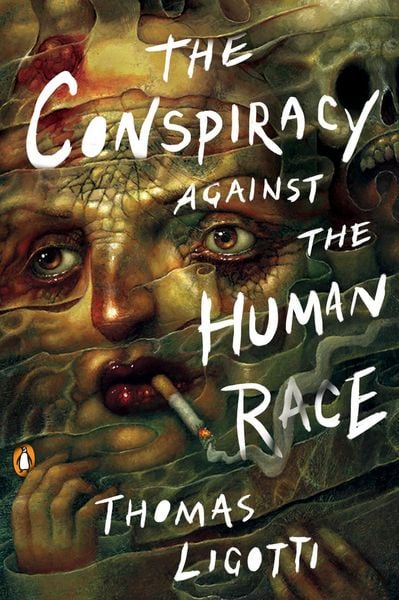

And, without wishing to overstrain the theoretical constructions, a closeness emerges here to the philosophical reflections of Eugene Thacker and Thomas Ligotti. Thacker describes horror not as an encounter with monsters but as a confrontation with a world that exists independently of humanity and remains utterly indifferent toward it: the world-without-us already cited elsewhere. Ligotti, in turn, understands the true horror as the realization that human consciousness holds no privileged place in the universe and that meaning cannot be presupposed. Ambient Funeral Doom approaches these thoughts not through texts or concepts but through its musical form. The extended soundscapes, the static harmonies, and the barely perceptible changes produce the impression of a music that behaves toward the listener with the same indifference as the cosmic world to which it points. The riff does not develop, climaxes fail to arrive, the sound simply seems to exist. The language of critics frequently draws on geological terms as a frame of reference: monolithic, tectonic, the persistently unhurried movements of continental plates, a sound with neither beginning nor end, larger than the self.
Thus the music seems to circle around a decentering of the self. Everyday consciousness organizes time teleologically: it expects development, purposefulness, and events, yet Ambient Funeral Doom undermines this structure. Climaxes, catharsis, eruptions, or dramatic turns fail to occur. The deep growling becomes part of the sonic body itself; the guitar playing relinquishes its function of binding attention through melody, solos, and dynamics; the subject producing the music loses its role as the center of the musical experience. Time forms the milieu in which perception unfolds, without holding development in reserve.
Posthuman Sublimity
Against this background, Ambient Funeral Doom can be understood as a musical form of a posthuman sublime. The classical sublime, as in Kant, arises in the face of overwhelming nature or infinite spaces, yet ultimately leads to the confirmation of human reason, capable of thinking the infinite. In Thacker and Ligotti, this reassurance is absent. There is no reconciliation and no triumph of the subject. Ambient Funeral Doom translates this perspective into sound. The music conveys the experience of the universe’s indifference toward the individual. It carries the awareness that the universe does not know the human being at all. Yet it does not narrate this cosmic indifference; rather, it lets the listener dwell, for the duration of a piece, in a mode of perception in which human centrality, eventfulness, and purposefulness are suspended. In this sense, Ambient Funeral Doom is less a music of mourning than a sonic aesthetic of indifference, one that attempts an approach to that “world without us” which Thacker describes as the limit of human experience.
The circle thus closes back to the history of the genre’s emergence outlined earlier. The Social Construction of Technology perspective described how a scene actively availed itself of home studio technology and internet forums in order to bring forth a new musical form. Agency and appropriation stood at its center there. Yet the result of this appropriation is a music whose aesthetic program withdraws precisely this agency and centrality of the subject once again. The production conditions of the genre were thus shaped by human creative power, while its sonic aim was, conversely, the suspension of that very power. Ambient Funeral Doom can accordingly be read as a subgenre that, through the very means of active technical and cultural appropriation, produces an aesthetic of indifference toward that same appropriation.